
How to Search Collin County Court Records
The county runs a dedicated Case Information page that explains its public search tools. The main one is Judicial Online Search. The county calls it a one-stop search engine for court cases past and present, covering traffic tickets, felony crimes, divorces, civil suits, inmates, bond amounts, and active warrants. It is mobile-friendly and updated around the clock. Case Search is a second option that looks through all case types from one screen.
Before you start, gather what you know. A full name, a date of birth, or a cause number speeds things up. Texas calls a case number a "cause number," and the clerks use that term too.
- Open Judicial Online Search from the county Case Information page.
- Type a party name, cause number, attorney name, or case style in the search box.
- Open Advanced Filters to narrow by case type, court type, filed date, or year of birth.
- Review the result list for filing date, case style, and status.
- Request a certified copy from the right clerk if you need a court-ready document.
Use the official Case Information page rather than a paid third-party site. The free county tools pull from the same court files the clerks keep.
The Texas Judicial Branch also publishes a plain-language overview of how state courts fit together, which helps first-time users pick the right court. A quick read of the basics of the Texas judicial system shows the seven trial-court types the state uses.
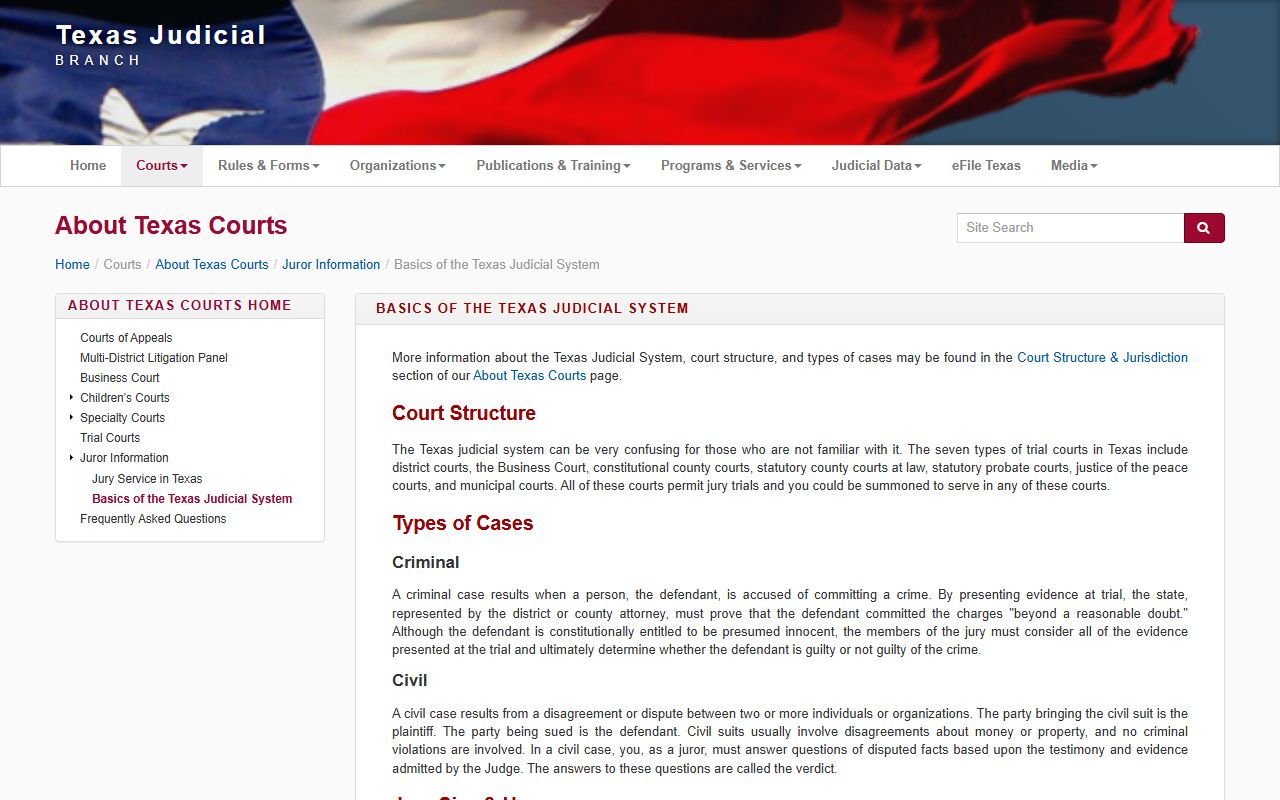
That page is a good map of where district, county, justice, and municipal courts sit before you run a Collin County court records search.
Collin County Court Records Search Fields
Judicial Online Search keeps the entry box simple, then hides the rest behind an Advanced Filters button. The fields below are what you will see when you open the case search and expand the filters. Each filter trims a long result list down to the case you want.
| Field Label | Type | Required | Notes / Format |
|---|---|---|---|
| Search | Text | No | Cause number, party name, case style, attorney name or bar number, or judicial officer. |
| Filed Date Range | Date | No | From and To fields, format MM/DD/YYYY. |
| Case Types | Checkbox | No | Criminal, Civil, Family, Probate. |
| Court Types | Checkbox | No | County, District, Justice (JP), Magistrate. |
| Case Status | Dropdown | No | Select a status, such as pending or closed. |
| Year of Birth Filter | Text | No | Narrows person-linked records. |
The global version of the search adds result tabs for Inmate, Case, Warrants, and Civil Paper, so one name search can pull several record types at once.
The Collin County Judicial System
Texas uses a layered court system, and Collin County reflects every level of it. District courts handle felonies, divorce, custody, and larger civil suits. County courts at law take misdemeanors, smaller civil cases, and some probate work. The county also has its own probate court, justice of the peace courts spread across precincts, and a magistrate court for early criminal steps. Appeals from the trial courts generally route to the Fifth Court of Appeals in Dallas.
Collin County lists 15 district courts and seven county courts at law, a sign of how fast the area has grown. Each numbered court has its own judge and docket.
Case flow: Justice Court › County Court at Law › District Court › Court of Appeals
| Court | Jurisdiction | Case Types |
|---|---|---|
| District Courts (15) | Felony and higher-value civil and family | Felony crimes, divorce, custody, large civil suits |
| County Courts at Law (7) | Misdemeanor, limited civil, some probate | Class A/B misdemeanors, civil suits, mental health, appeals |
| Probate Court | Estates and guardianship | Wills, heirship, guardianship, mental commitment |
| Justice of the Peace Courts | Small civil and Class C | Small claims, evictions, some traffic, truancy |
| Magistrate Court | Pretrial steps | Warrants, bond, probable cause, rights advisement |
The state court system maps these layers on its own pages. The Texas Judicial Branch courts overview describes how trial and appellate courts connect across the state.
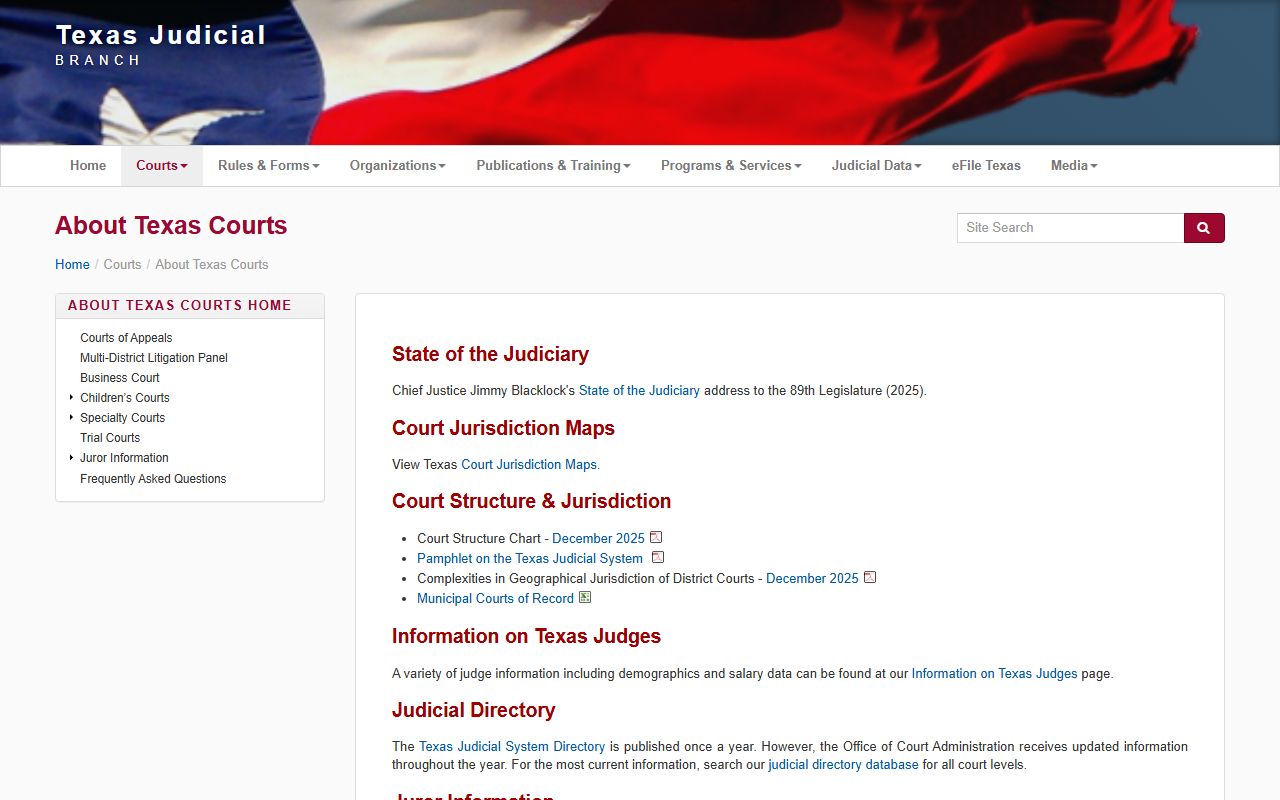
It is worth a look if you are unsure whether your case belongs in a county court at law or a district court.
Collin County Courthouses
Most court action happens at the Russell A. Steindam Courts Building on Bloomdale Road in McKinney. The district courts, county courts at law, probate court, and magistrate court all sit there, along with the District Clerk. The County Clerk's main office is just up the road, and the jail sits a short drive away. Filing a case and recording a deed can mean two different buildings on the same county campus.
Russell A. Steindam Courts Building
2100 Bloomdale Rd.
McKinney, TX 75071
(972) 548-4100
Collin County Detention Facility
4300 Community Ave.
McKinney, TX 75071
(972) 547-5100
Types of Court Records Available in Collin County
Collin County court records cover the full range of cases the trial courts hear. The custodian depends on the case. Felony, family, and large civil files belong to the District Clerk. Misdemeanor and smaller civil files in the county courts at law go through the County Clerk. Knowing which office holds the file tells you where to search and where to ask for copies.
- Criminal records - felony cases at the District Clerk, Class A and B misdemeanors at the County Clerk.
- Civil records - lawsuits, judgments, and collection filings split between district and county courts.
- Family and divorce records - divorce, custody, and support held by the District Clerk.
- Probate records - wills, estates, heirship, and guardianship in the Probate Court.
- Traffic records - county justice court tickets online; city tickets stay with the city.
The felony-versus-misdemeanor split is the single most useful thing to learn before you search.
| Felony Records (District Clerk) | Misdemeanor Records (County Clerk) |
|---|---|
| Indictments, district court judgments | Informations, county court at law judgments |
| Family, divorce, large civil suits | Class A/B charges, smaller civil suits |
| Online from 1988 (criminal), 1984 (civil) | Online from 2000 (criminal), 1984 (civil) |
What Collin County Court Records Show
A typical online result shows the bones of a case. You see the cause number, the case style, the filing date, and the status. Click through, and a case can show parties, attorneys, docket settings, and outcomes. Some documents stay behind subscriber access or the re:SearchTX portal. The result list itself keeps sensitive identifiers off the screen, so a date of birth shows only as a year.
| Field | What It Shows |
|---|---|
| Cause Number | The case number; formats vary by court and case type |
| Filing Date | When the case was filed, shown as MM/DD/YYYY |
| Case Style | The party caption, such as The State of Texas vs. a defendant |
| Parties | Plaintiff and defendant, or petitioner and respondent |
| Status | Pending, Filed, Case is Closed, or a course-completed note |
| Disposition | The outcome of a charge or claim once entered |
For full document images, the county points to re:SearchTX and the clerk copy process rather than the quick result list.
Public Access Laws for Collin County Court Records
Texas treats government records as open by default, but court files follow their own rules. The Texas Public Information Act sets the broad policy, while access to court information is governed by rules the Supreme Court of Texas adopts. That is why the county tells people to ask the clerks for court records, not the open-records staff. Police reports go to the agency that wrote them, and city cases go to the cities.
Key Statutes:
Texas Government Code § 552.021 - public information must be available during normal business hours.
Texas Code of Criminal Procedure Chapter 55 - sets how qualifying arrest and case records get expunged.
Texas Family Code Chapter 58 - keeps most juvenile justice records confidential.
Note: Court records must be requested from the District Clerk, County Clerk, or justice courts, not from the county public-information portal.
Records That Are Restricted or Confidential
Not every court file is open. Juvenile cases, sealed civil records, expunged arrests, and adoption files are closed or limited. Mental health commitments and parts of guardianship cases carry medical detail and stay restricted. Collin County district courts also use standing orders that seal birth certificates filed in some family and child-welfare cases. Social Security numbers, driver-license data, and financial account numbers get redacted before release.
To view a sealed record, a person usually has to file a motion in the court that sealed it and show a legal reason to unseal. Expunction goes the other way: a signed order tells agencies to destroy or hide qualifying records. A nondisclosure order is narrower; it limits public release but does not erase the file for criminal justice agencies.
Specialty Courts in Collin County
Collin County runs several problem-solving courts that work alongside the regular dockets. The Adult Mental Health Court serves eligible defendants who need treatment and supervision rather than a standard track. The Veteran Court Program, linked to the 296th District Court, supports justice-involved veterans with monitoring and veteran-specific services. County Court at Law 7 hosts a DWI/Drug Court for eligible impaired-driving and substance cases, and the 199th District Court lists a Family Preservation Program.
These courts ask for treatment, testing, and regular check-ins. Entry depends on eligibility and court approval, so the exact rules vary by program.
Collin County Sheriff and Jail
The Collin County Sheriff's Office, led by Sheriff Jim Skinner, runs the county jail and the inmate search tools. The office serves more than 1.1 million residents across 880 square miles in the northeast corner of the Dallas/Fort Worth area. The jail, at 4300 Community Avenue in McKinney, is a direct-supervision facility with officers stationed inside the housing units. The county inmate list shows current inmates and people released within the past 24 hours.
For the full roster and booking details, see Collin County inmate records. To check open warrants, use the warrant records page, and for recent releases visit released inmates.
Marriage, Divorce, and Probate Court
These three records sit in different offices. The County Clerk issues marriage licenses and keeps marriage records, including a genealogy archive that reaches back more than a century. Divorce is a district court matter, so divorce decrees live with the District Clerk. The Probate Court handles wills, estates, and guardianship. For details, see marriage and divorce records and probate records.
- Testator
- A person who makes a will.
- Executor
- The person named to carry out the terms of a will.
- Conservator
- A person a court appoints to manage another person's care or estate.
Collin County Court Records Fees
The clerks charge set fees for searches and copies. The District Clerk charges $5 for a record search when you do not have the cause number. Plain copies run $1 per page, and a certified copy adds a $5 certificate fee per document. The County Clerk uses similar copy and certification charges for the records it holds. These amounts come from the clerks' own fee pages and forms.
| Item | Amount |
|---|---|
| Record search (cause number unknown) | $5.00 |
| Noncertified paper copy | $1.00 per page |
| Certified copy certificate fee | $5.00 per document |
| Copy on disk over 100 pages | $20.00 |
Bring a check, money order, or cash for the District Clerk; the office does not run record searches by phone.
How to Interpret Collin County Court Records
Court files use shorthand that can trip people up. A charge is not a conviction. "Pending" means the case is still open. "Dismissed with prejudice" means it generally cannot be refiled, while "without prejudice" leaves the door open. A capias is an order to arrest, often after a missed setting. Deferred adjudication is a Texas outcome that can avoid a final conviction if the person finishes the terms.
Read the status and the disposition together. A closed case with deferred adjudication reads very differently from a closed case with a guilty judgment.
Accuracy and Record Limitations
Online tools update on different clocks. The county says Case Search refreshes daily at 6 p.m., while Case Record Inquiry updates in real time. Judicial Online Search runs around the clock. A same-day filing may not appear until the next update, and clerical changes take time to post.
Note: Always confirm a case detail with the clerk who holds the file before you rely on an online record for anything important.
History of Collin County Courts
Collin County was founded in 1846 when Texas joined the Union, and McKinney has been the county seat ever since. The county takes its name from Collin McKinney, a signer of the Texas Declaration of Independence. The City of McKinney's history page notes that the Old Collin County Courthouse, finished in early 1875, was built in the French Second Empire style and was considered the tallest building in Texas north of San Antonio.
That historic courthouse still anchors the downtown square, but modern court work has moved north to the Bloomdale Road campus. The shift mirrors the county's growth from a rural seat to a large suburb of Dallas.

The McKinney official history page tells the story of the old courthouse square in more depth.
Self-Help and Legal Aid Resources
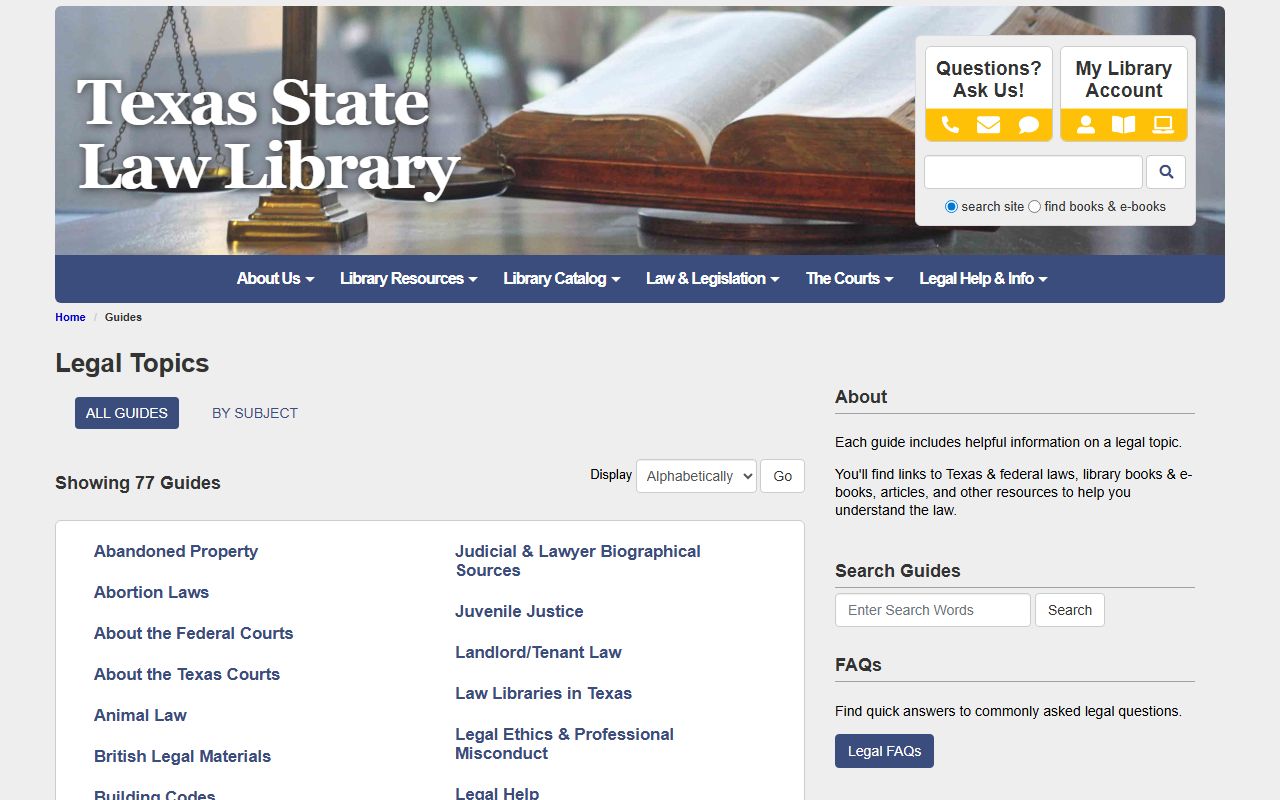
People without a lawyer have free options in Collin County. The District Clerk links Guide & File, which builds certain court forms step by step, and eFileTexas handles electronic filing for civil, family, and probate cases. Statewide help comes from Texas Law Help and the Texas State Law Library, which both publish plain-language guides on common case types.
The Texas State Law Library keeps a deep set of legal research guides for self-represented filers. Its legal guides walk through topics like divorce, eviction, and name changes.
For income-eligible residents, Legal Aid of NorthWest Texas offers civil legal help across the region. Check the current intake details on the Legal Aid of NorthWest Texas site before you visit.

Court-appointed counsel is handled through the county's Indigent Defense office for people who qualify in criminal cases.
Frequently Asked Questions
How do I search Collin County court records online?
Start at the county Case Information page and pick Judicial Online Search or Case Search. Search by party name, cause number, case style, attorney name, or judicial officer. Open the advanced filters to narrow by case type, court type, filed date, status, or year of birth. The same portal can surface inmates, warrants, and civil papers from one name search.
Are court records requested through the county open-records portal?
Usually no. The county says court records must come from the clerks: the District Clerk, the County Clerk, or the justice courts. The open-records process covers county government files like budgets, contracts, and Commissioners Court records. It is not the place to request a court case file.
Which clerk keeps divorce and felony records?
Both belong to the District Clerk. Divorce is a family case in district court, and felonies are district court matters too. Misdemeanors and smaller civil suits in the county courts at law go through the County Clerk instead. Older files not yet online require a clerk record request and a small search fee.
More on the Collin County Court Records FAQ page.