
Arrest Records in Collin County
An arrest record starts at booking. When deputies or city police bring someone to the Collin County Detention Facility, the jail intake staff create a record. That record ties a name to a booking date, a sex, a year of birth, and an SO number. The Sheriff's Office, led by Sheriff Jim Skinner, runs that jail and keeps the booking data. The office serves more than 1.1 million residents across 880 square miles in the northeast corner of the Dallas/Fort Worth area. An arrest is not proof of guilt. It just means an officer had cause to take someone into custody and book them.
Arrest records and criminal court records are two different things. The jail makes the arrest record at booking. The court makes a case file later, once a prosecutor files charges. The Collin County Detention Facility's intake unit, called Admissions and Release, is the entry and exit point for inmates. The jail roster shows current inmates and people let out within the past 24 hours. For the full court history of a charge, the file lives with a clerk. Felony files belong to the District Clerk, and misdemeanor files belong to the County Clerk. Those full case files are covered on the Collin County court records page.
So an arrest record answers a narrow question. Was this person booked, and on what charge? The court file answers the rest.
How to Search Collin County Arrest Records
The fastest county tool is Judicial Online Search. The Sheriff's inmate page links a "Find Someone in Jail" tool, and the county Courts page says Judicial Online Search can pull current inmates, including those released in the last 24 hours, plus cases, active warrants, and civil papers from one screen. The global version of the search shows result tabs for Inmate, Case, and Warrants, so a single name search can surface several record types at once. Before you start, gather a full name or an SO number. A year of birth helps narrow common names.
- Open the Judicial Online Search global portal from the county Courts page.
- Type a person's name or SO number into the search box.
- Click the Inmate tab to see booking results, then use the Year of Birth filter to trim the list.
- Open a result for name, year of birth, sex, booking date, and SO number; click the linked case or warrant tabs for the charge.
For recent arrests only, the jail roster is the quickest path. The list includes all current inmates and anyone released within the past 24 hours, so a fresh booking shows up fast. For older arrests or a full charge history, you will move from the jail data into court records and statewide criminal history, which the next sections cover.
The Collin County District Attorney prosecutes the cases that follow an arrest. The office is led by Criminal District Attorney Greg Willis, and you can read about the office on its Meet the D.A. page.

The DA page is a good reminder that the arrest is only the first step; the prosecutor decides what charges move forward.
Arrest Records vs. Criminal Court Records
People mix these up all the time. An arrest record is born at booking and lives with the Sheriff. A criminal court record is born when charges are filed and lives with a clerk. They overlap, but they are not the same file, and they update on different clocks. A booking can show up on the jail roster within hours. The matching court case may take days to appear in the case search after a prosecutor files it.
| Arrest Record | Criminal Court Record | |
|---|---|---|
| Source | Sheriff / city police | District Clerk or County Clerk |
| Created When | At booking | When charges are filed |
| Contents | Name, booking date, SO number, charge, mugshot where available | Complaints, indictments, pleas, judgments, disposition |
| Where to Search | Jail roster / Inmate tab | Judicial Online Search case tab |
For the full court side, see Collin County court records. That page walks through the case search and the felony-versus-misdemeanor split.
Charges vs. Convictions
A charge is an accusation. A conviction is the result. Being charged means a prosecutor has accused someone, often after a grand jury indictment in a felony or an information in a misdemeanor. A conviction means the case ended in a guilty plea or a guilty verdict. The gap between the two matters, because the standard of proof is much higher to convict. Both stages can show up in public records, but they mean very different things for the person named.
| Charge | Conviction | |
|---|---|---|
| Stage | Accusation | Verdict or plea |
| Burden of Proof | Probable cause | Beyond a reasonable doubt |
| Charging Paper | Information (misdemeanor) or indictment (felony) | Judgment of conviction |
| Public Record | Yes | Yes |
Texas adds a wrinkle called deferred adjudication. It is a community-supervision outcome that can avoid a final conviction if the person finishes the terms. So a closed case can read as no conviction even though the person was charged. Read the status and the disposition together before you draw any conclusion.
Sealed vs. Expunged Records
Not every arrest stays public forever. Texas law gives two paths to limit access, and they are not the same. Expunction destroys qualifying records. A nondisclosure order seals them from the public but keeps them visible to criminal justice agencies. Texas Code of Criminal Procedure Chapter 55 governs expunction, and Texas Government Code Chapter 411 covers nondisclosure. Both take a petition, and most are not automatic.
| Sealed (Nondisclosure) | Expunged | |
|---|---|---|
| Visibility | Hidden from the public | Destroyed; treated as if it never existed |
| Law Enforcement | Still visible to criminal justice agencies | Very limited; agencies must comply with the order |
| Governing Law | Gov't Code Chapter 411 | Code of Criminal Procedure Chapter 55 |
| Eligibility | Some deferred outcomes, after waiting periods | Acquittals, pardons, some dismissed or no-charge arrests |
Expunction starts with a petition in the proper court. The person names the agencies that hold records, serves the right parties, and gets a signed order. Once that order is final, agencies named in it must destroy or hide the records. Common denial reasons include filing too early, a disqualifying conviction, or an incomplete agency list. The District Clerk's forms list includes expunction and juvenile sealing resources, and the County Clerk has a notarized nondisclosure request form for County Court at Law records.
Note: A nondisclosure order limits public release but does not erase the file for criminal justice agencies or some licensing bodies.
Mugshots and Booking Photos
A mugshot is the booking photo taken at intake. In Collin County, the county case-information page says mugshots may appear on criminal cases where available, and the inmate search can show booking photos. They do not always show in the plain text result list, but they can appear when you open a case or an inmate profile that includes one. A mugshot is part of the arrest record, not the court file.
Booking photos sit in a gray zone. They are public in many cases, but Texas law lets agencies withhold some law-enforcement material under the Government Code Section 552.108 exception, especially during an active investigation. A photo on the roster today can drop off once the person is released. The list only holds current inmates and people let out in the last 24 hours, so a mugshot is not a permanent public posting through the county tool.
Statewide Criminal Records Search
County arrest data is local. For a full statewide picture, Texas keeps criminal history at the state level. The Texas Department of Public Safety holds criminal history record information under Texas Government Code Chapter 411. That law governs how DPS collects criminal history, who can get it, and what conviction data is public. A county jail record shows one booking; the DPS record can show a person's broader history across Texas.
The framework that controls statewide criminal history is laid out in the state code. The full text of Texas Government Code Chapter 411 explains DPS criminal history dissemination and public conviction data.
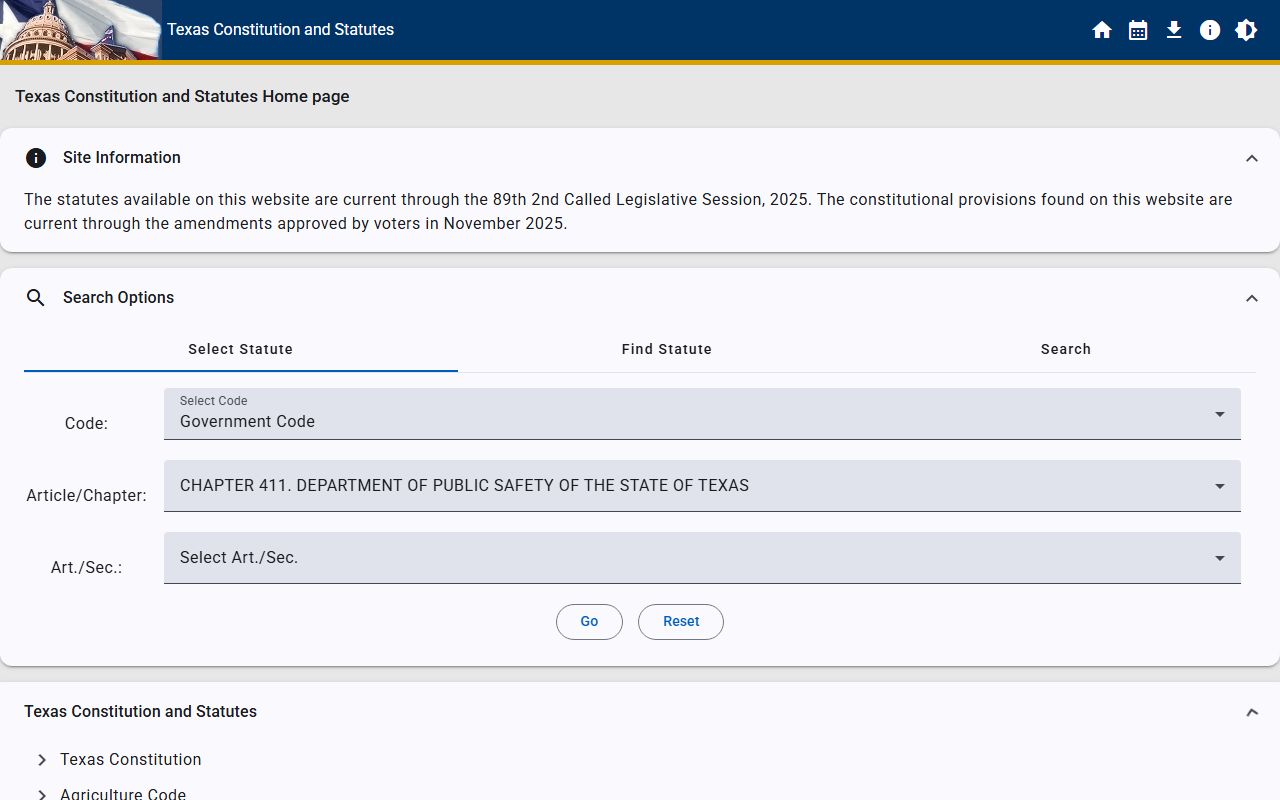
That chapter is the reason a county court record and a statewide criminal history are two separate things, kept by two different offices.
Texas also keeps a public sex offender registry. Under Texas Code of Criminal Procedure Chapter 62, qualifying adult and juvenile offenders must register with local law enforcement where they live, and most registry data is public, including name, address, photo, and offense. You can review the law behind it in Code of Criminal Procedure Chapter 62.
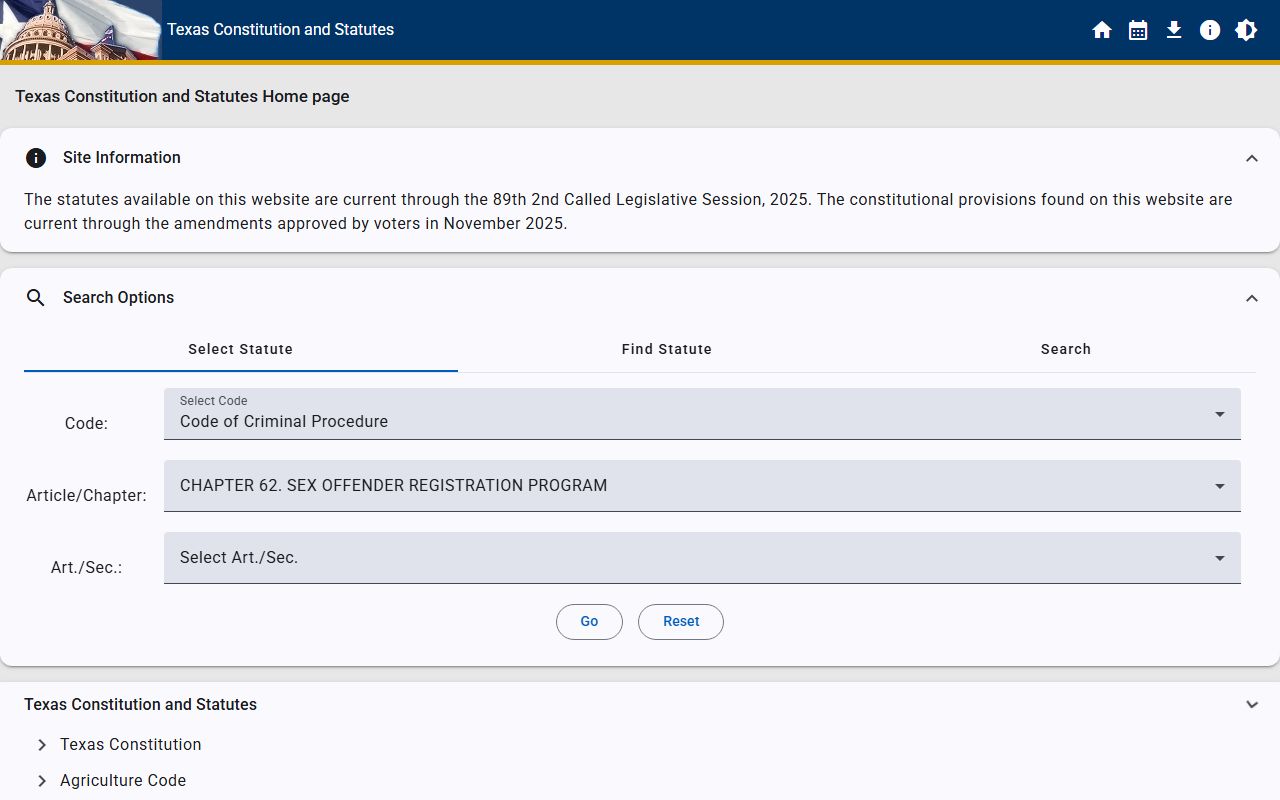
Failure to comply with that registration law can lead to felony prosecution, which is why the registry stays public.
From Arrest to Charge in Collin County
An arrest does not move to court on its own. After booking, the Magistrate Court advises the person of their rights, checks probable cause, and sets bond. Then the Collin County District Attorney decides what charges to file. The office handles felony and misdemeanor prosecution for the county. The DA's stated mission is "Pursuing Justice and Protecting Our Community."
The office puts that mission front and center on its site. You can read the full DA mission statement for how the office frames its work.
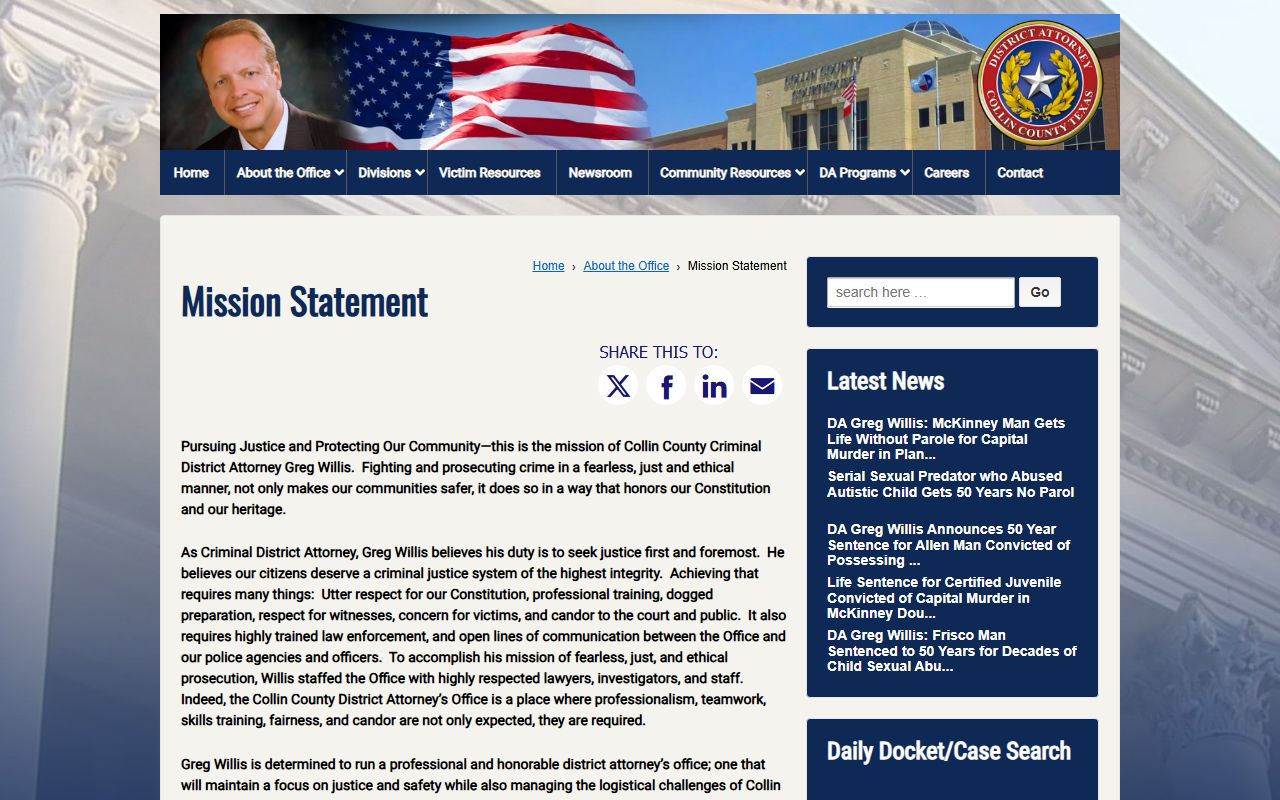
The DA also runs victim services. Through the Integrated Victim Services System, victims can get free notifications about jailed suspects and scheduled court events, 24 hours a day, in English and Spanish.
Background Check Considerations
There is a difference between a casual lookup and a formal background check. A free county search tells you what is on the public record right now. A formal background check used for hiring, housing, or credit falls under the federal Fair Credit Reporting Act, and only a licensed consumer reporting agency can run one for those purposes. The free DPS and county tools are not built for FCRA use.
Important: This site is a private resource, not an FCRA-regulated consumer reporting agency, and its records cannot be used for employment, tenant, credit, or insurance screening.
Restricted Criminal Records in Collin County
Some arrest and criminal records are closed. Juvenile records are restricted under Texas Family Code Chapter 58, so the county does not offer open online lookup of juvenile case files. Sealed warrants and sealed indictments may not appear publicly until an arrest is made. Active investigations can be withheld under the law-enforcement exception in the Public Information Act. Expunged records are destroyed, and sealed records are hidden from public view.
Collin County also redacts sensitive identifiers before release. Social Security numbers, driver-license data, and financial account numbers get stripped out, and the inmate result list shows only a year of birth rather than a full date. Mental health commitment filings carry medical detail and stay restricted. If a record does not appear in a public search, it may be sealed, juvenile, or tied to an open case, not simply missing.