
How to Search Collin County Court Records
The county keeps a dedicated Case Information page that points you to the right tool. The main one is Judicial Online Search. The county calls it a one-stop search engine for past and present court cases, covering traffic tickets, felony crimes, divorces, civil suits, inmates, bond amounts, and active warrants. It is mobile-friendly and updated around the clock. A second tool, Case Search, looks through all case types from one screen, while Case Record Inquiry searches one case type at a time and refreshes in real time.
Before you start, gather what you know. A full name, a date of birth, or a cause number all help. Texas calls a case number a "cause number," and the clerks use that term too. For older files not yet online, a clerk record request and a small search fee may be needed.
- Open Judicial Online Search from the county Case Information page.
- Type a party name, cause number, attorney name or bar number, case style, or judicial officer in the Search box.
- Open Advanced Filters to narrow by filed date range, case type, court type, case status, or year of birth.
- Review the result list for the filing date, case style, and status.
- Request a certified copy from the right clerk if you need a court-ready document.
Use the official Case Information page rather than a paid third-party site. The state also keeps a plain-language map of how its courts fit together. A quick read of the basics of the Texas judicial system helps first-time users pick the right court before they search.
The County Clerk runs a separate public search for the land, vital, and business records it records. You can reach the official document index through the County Clerk public records search, which is where the property copy form sends people to pull document numbers.
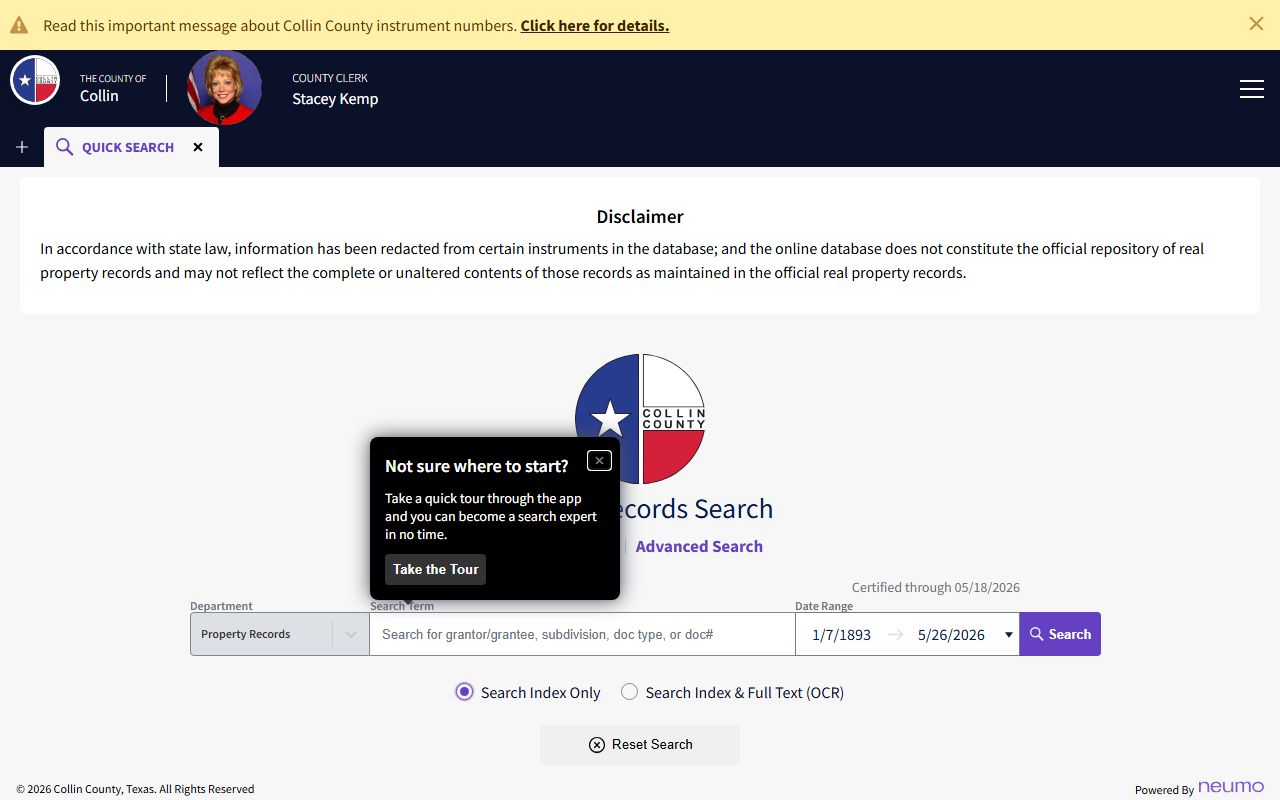
That index covers deeds, plats, marriage records, and other recorded documents the County Clerk holds, separate from the court case search.
Collin County Court Records Search Fields
Judicial Online Search keeps the entry box simple, then hides the rest behind an Advanced Filters button. The fields below are what you see when you open the case search and expand the filters. Each filter trims a long result list down to the case you want. None of the fields are strictly required, but the Search box is what actually returns matches.
| Field Label | Type | Required | Notes / Format |
|---|---|---|---|
| Search | Text | No | Cause number, party name, case style, attorney name or bar number, or judicial officer. |
| Filed Date Range - From | Date | No | Date picker, format MM/DD/YYYY. |
| Filed Date Range - To | Date | No | Date picker, format MM/DD/YYYY. |
| Case Types | Checkbox | No | Criminal, Civil, Family, Probate. |
| Court Types | Checkbox | No | County, District, Justice (JP), Magistrate. |
| Case Status | Dropdown | No | Select a status, such as pending or closed. |
| Year of Birth Filter | Text | No | Narrows person-linked records. |
The global version of the search adds result tabs for Inmate, Case, Warrants, and Civil Paper. One name search can pull several record types at once, which is handy when you do not know where a case lives.
Types of Collin County Court Records
Collin County court records cover the full range of cases the trial courts hear. The custodian depends on the case. Felony, family, and large civil files belong to the District Clerk. Misdemeanor and smaller civil files in the county courts at law go through the County Clerk. Justice courts and city courts handle Class C and traffic matters. Knowing which office holds the file tells you where to search and where to ask for copies.
Typical court files hold petitions, answers, motions, orders, judgments, and the like. Criminal files add complaints, indictments or informations, bond papers, plea documents, and sentences. The split below is the single most useful thing to learn before a search.
- Civil records - lawsuits, judgments, and collection filings split between district and county courts.
- Criminal records - felony cases at the District Clerk, Class A and B misdemeanors at the County Clerk.
- Family and divorce records - divorce, custody, support, and protective orders held by the District Clerk.
- Probate records - wills, estates, heirship, and guardianship in the Probate Court.
- Traffic and Class C records - county justice court tickets online; city tickets stay with the city.
- Small claims and eviction records - filed in the justice courts by precinct.
Mental health and juvenile matters also pass through the courts, but those files carry tight access rules. They are not open the way a standard civil or criminal case is.
What Collin County Court Records Show
A typical online result shows the bones of a case. You see the cause number, the case style, the filing date, and the status. Click through, and a case can show parties, attorneys, docket settings, and outcomes. Some documents stay behind subscriber access or the re:SearchTX portal. The result list keeps sensitive identifiers off the screen, so a date of birth shows only as a year. Case numbers come in several formats, such as 003-04339-2026, a traffic style like 04-TR-26-04245, or a magistrate style like DCMAG-46113-2026.
| Field | What It Shows |
|---|---|
| Cause Number | The case number; formats vary by court and case type. |
| Filing Date | When the case was filed, shown as MM/DD/YYYY. |
| Case Style | The party caption, such as The State of Texas vs. a defendant. |
| Parties | Plaintiff and defendant, or petitioner and respondent. |
| Status | Pending, Filed, Case is Closed, or a course-completed note. |
| Disposition | The outcome of a charge or claim once entered. |
| Attorneys | Searchable by name or bar number; details may sit in case detail. |
For full document images, the county points to re:SearchTX and the clerk copy process rather than the quick result list. Hearing dates do not appear in the result list either, so use Court Calendar Search for those.
Public Access Framework for Collin County Court Records
Texas treats government records as open by default, but court files follow their own track. The Texas Public Information Act sets the broad policy, while access to court information is governed by rules the Supreme Court of Texas adopts. Texas Government Code Chapter 552 creates the presumption of access for ordinary county records. A separate part of that chapter, Section 552.0035, says judiciary records run on Supreme Court rules instead. That is why the county tells people to ask the clerks for court records, not the open-records staff.
Anyone can search the public portals at no charge. Copies and certified records carry set fees, and a record search runs $5 when you do not have the cause number. The District Clerk asks for a complete name and date of birth on a written request, plus a self-addressed stamped envelope and payment. Searches normally finish in one to three days, though the office says to allow up to 10 business days.
Note: Court case files are requested from the District Clerk, County Clerk, or justice courts, not from the county public-information portal.
Records That Are Sealed or Confidential in Collin County
Not every court file is open. Juvenile cases, sealed civil records, expunged arrests, and adoption files are closed or limited. Mental health commitments and parts of guardianship cases carry medical detail and stay restricted. Collin County district courts use standing orders that seal birth certificates filed in some family and child-welfare cases. Social Security numbers, driver-license data, and financial account numbers get redacted before release under Texas Government Code Chapter 552 exceptions. Juvenile justice records stay confidential under Texas Family Code Chapter 58.
To view a sealed civil record, a person usually files a motion in the court that sealed it and shows a legal reason to unseal, under Texas Rule of Civil Procedure 76a. Expunction goes the other way. Texas Code of Criminal Procedure Chapter 55 lets a signed order tell agencies to destroy or hide qualifying records. A nondisclosure order is narrower. It limits public release but does not erase the file for criminal justice agencies. The County Clerk even keeps a notarized nondisclosure request form for its court records.
In-Person Court Record Requests
When a file is not online, or you need a certified copy, the District Clerk handles felony, family, and district civil records in person or by mail. Bring a complete name and date of birth, and pay by check, money order, or cash. The office does not run record searches by phone. Certified copies add a $5 certificate fee per document on top of the per-page copy cost.
| Item | Amount |
|---|---|
| Record search (cause number unknown) | $5.00 |
| Noncertified paper copy | $1.00 per page |
| Noncertified electronic copy | $1.00 up to 10 pages, then $0.10 each more |
| Certified paper copy | $1.00 per page plus $5.00 per document |
| Copy on disk over 100 pages | $20.00 |
Collin County District Clerk
2100 Bloomdale Rd.
McKinney, TX 75071
(972) 548-4100
Mon-Fri, 8:00 a.m.-4:30 p.m.
Electronic filing for civil, family, and probate cases runs through eFileTexas. You can start an e-filing through the state portal at eFileTexas, which clerks across the county accept.
The same portal feeds filings into the case search, so an e-filed document shows up in the public record after the clerk accepts it.
Federal Court Records for Collin County
Some cases tied to Collin County are not in the county system at all. Collin County sits in the U.S. District Court for the Eastern District of Texas. Federal criminal prosecutions, federal-question lawsuits, patent disputes, and civil rights cases may be filed there if venue and jurisdiction fit. County clerks do not keep federal dockets, and the county case search will not pull a federal case. The court keeps its own public site for general information and contact details.
Start with the U.S. District Court for the Eastern District of Texas for divisions, judges, and local rules. The court's filing and docket system, CM/ECF, is used by attorneys and registered filers.
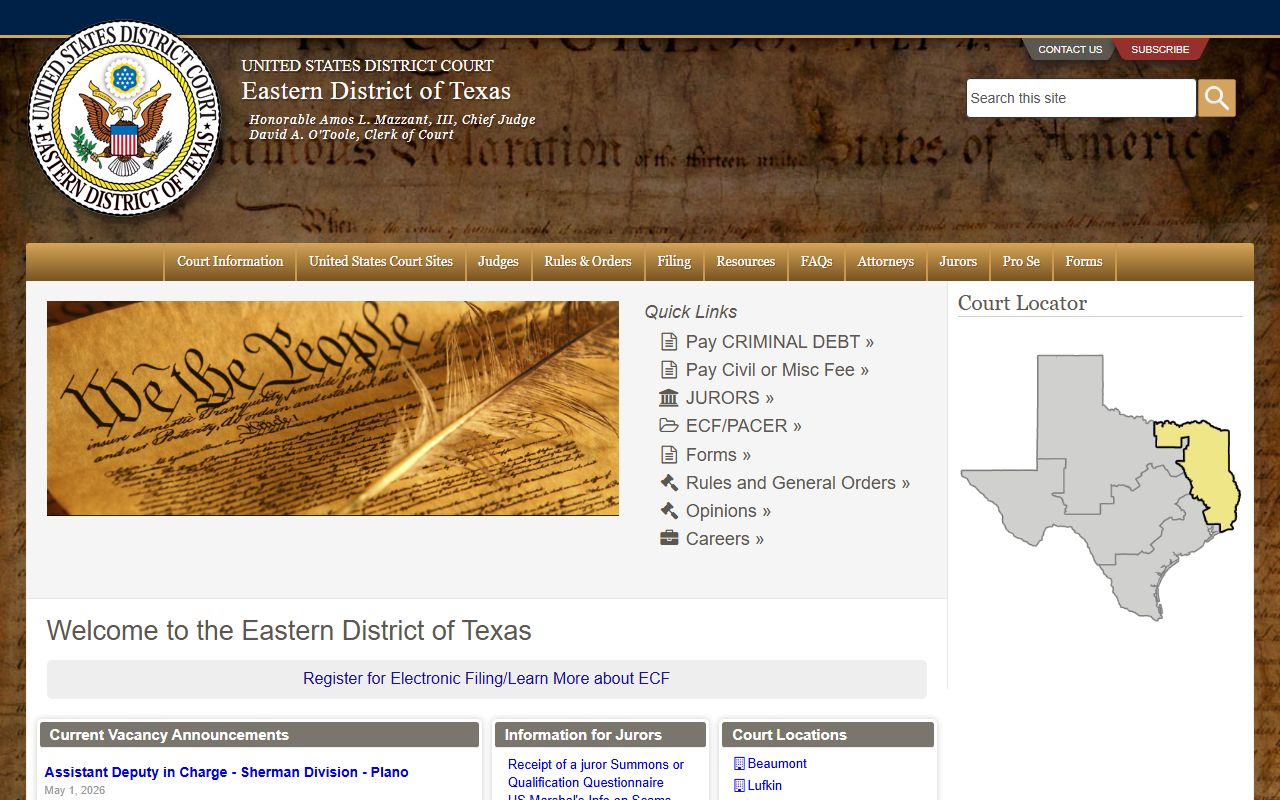
That site explains which division hears cases from this part of North Texas and how to reach the clerk's office.
To read or download a federal case file, the official system is PACER. Users register for an account, search by court or by party and case number, and pay per-page fees unless they qualify for a waiver. You can set up access at PACER, the official federal case-access service.
PACER charges fees, so people who only need court opinions sometimes use a free alternative instead.
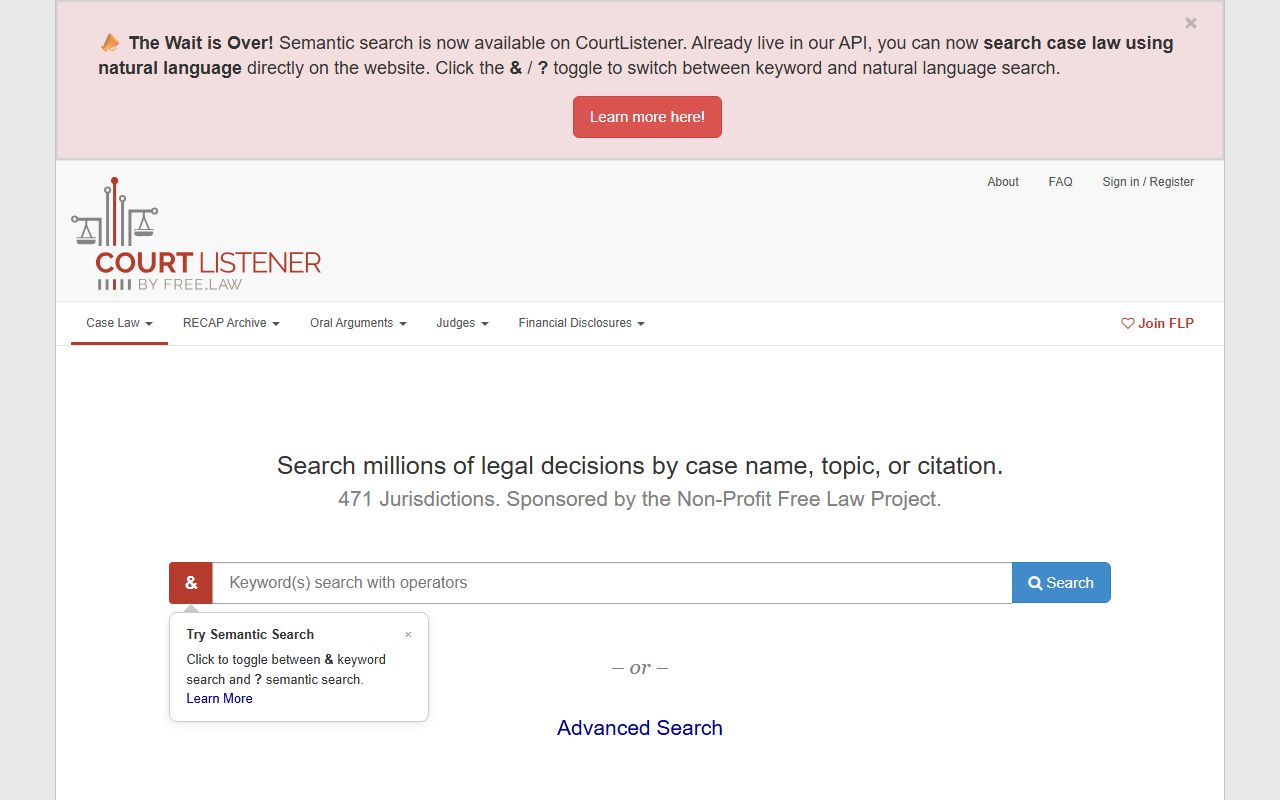
For free reading of many federal and state opinions and dockets, CourtListener keeps a large searchable archive. It does not replace PACER for every filing, but it helps when you want published opinions at no cost.
Bankruptcy filings for Collin County residents are not in county probate records either; they sit in the U.S. Bankruptcy Court for the Eastern District of Texas.