
Getting a Marriage License in Collin County
Marriage licenses are County Clerk records in Collin County. The County Clerk, Stacey Kemp, issues them and keeps them. The McKinney office handles license applications, and a Plano office has handled them too when open. A couple applies together, signs, pays, and the office issues the license. After the ceremony, the signed license comes back to the County Clerk to be recorded. That return step is what makes the marriage part of the official record.
State law sets the rules for who can marry and how. Texas Family Code Chapter 2 governs license issuance across the state. You can read the full chapter on the official statute site to see the ID, age, and officiant rules. The Texas Family Code Chapter 2 marriage statute spells out who may issue a license and who may perform the ceremony.
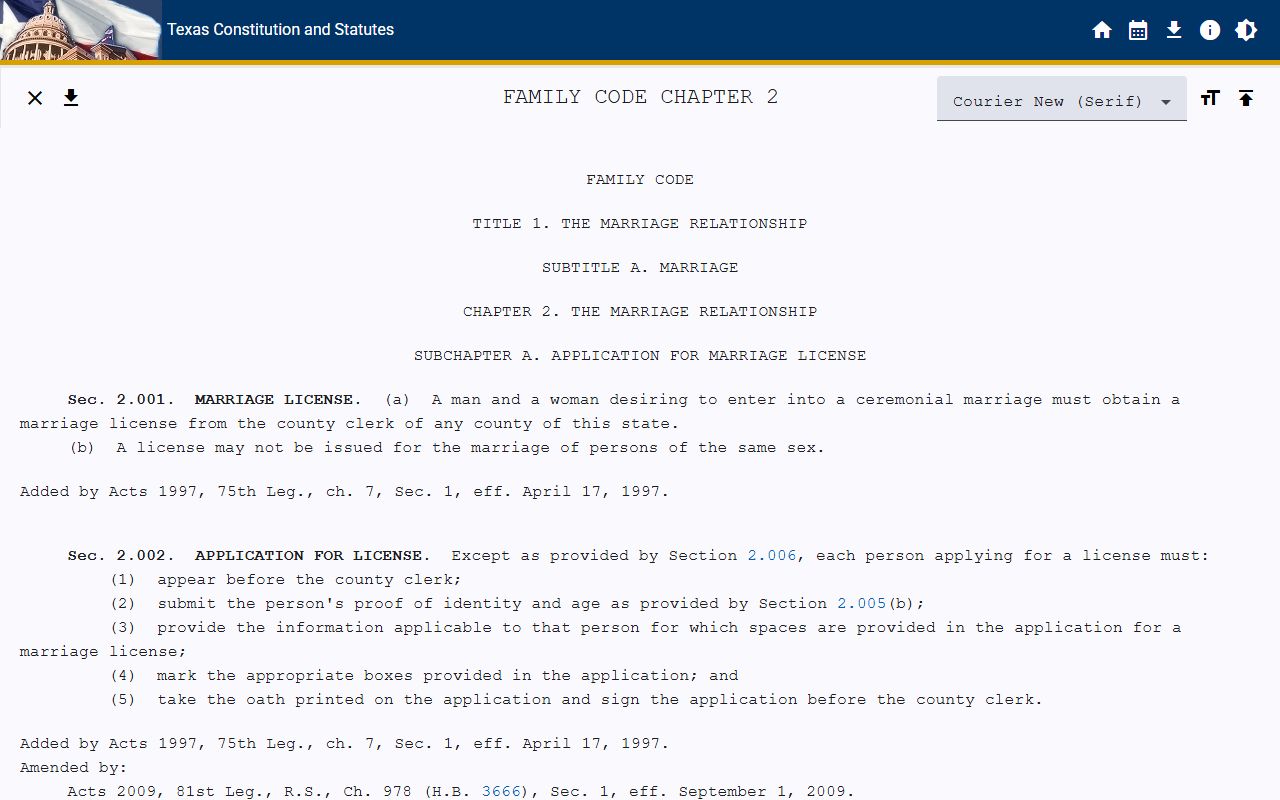
That chapter is the backbone for every marriage license a Texas county clerk issues, including the ones recorded in Collin County.
A few rules are worth knowing up front. Texas does not require a blood test. Both people generally need proof of identity and age. There is a short waiting period between the day a license is issued and the day a ceremony may happen, though the law waives it in some cases. Active military members, a court waiver, and completion of a state-approved premarital education course can each lift or shorten that wait.
How to Apply for a Marriage License
The process is short when you come prepared. Both partners must apply together at the County Clerk. Bring valid ID and be ready to pay the license fee. The steps below follow the standard Texas order, from the office visit through recording the signed license.
- Confirm which County Clerk office is open and plan your visit; the McKinney office is at 2300 Bloomdale Road, and a Plano location has operated when staffed.
- Bring valid photo ID and proof of age for both partners, plus payment for the license fee.
- Complete the license application through the County Clerk and have both partners sign.
- Pay the marriage license fee; a premarital education course can reduce the state fee under Texas law.
- Observe the Texas waiting period before the ceremony unless an exemption applies.
- Have the ceremony performed by an officiant authorized under Texas Family Code Chapter 2.
- Return the signed license to the County Clerk for recording, then order a certified copy if you need one.
Note: The current Collin County marriage license fee changes from time to time, so confirm the exact amount with the County Clerk before you go.
Marriage License Application Fields
An applicant gives basic identity and history details when applying. The table below shows the common pieces of information a Texas couple provides. The County Clerk uses these to issue the license and to record the marriage once the signed license comes back.
| Field | Required | Notes |
|---|---|---|
| Full Legal Name | Yes | Both partners; matched to the photo ID shown. |
| Date of Birth | Yes | Used with ID to confirm age and identity. |
| Proof of Identity and Age | Yes | Valid photo ID for each partner under Texas Family Code Chapter 2. |
| Prior Marriages | Yes | Whether a prior marriage ended and how. |
| Premarital Education | No | A completed course can reduce the state license fee. |
The exact form layout is set by the County Clerk, so the live application may ask for these items in a slightly different order.
Collin County Marriage and Divorce Fees
Fees split by office. The County Clerk charges the marriage license fee and the cost of a certified marriage copy. The District Clerk charges the fees tied to divorce filing and to copies of a divorce decree. The copy and certification charges below come from the District Clerk's own fee schedule. The marriage license amount is not listed here on purpose, because it shifts and a premarital course can lower it.
| Item | Amount |
|---|---|
| Marriage license | Confirm current fee with the County Clerk |
| Noncertified paper copy | $1.00 per page |
| Certified copy certificate fee | $5.00 per document |
| Record search (cause number unknown) | $5.00 |
A certified divorce decree copy runs $1 per page plus the $5 certification per document. For the County Clerk's marriage license and certified marriage copy costs, ask the office for the current schedule.
How to Look Up Collin County Marriage Records
The County Clerk keeps marriage licenses and gives out certified copies. You can order a certified copy online through the Vital Records Requests provider linked on the County Clerk page, or get one in person or by mail through the office. To find a record, it helps to know both partners' full names and the year of the marriage. A clerk can check the index from there.
Older marriage records have a special home. The County Clerk's Genealogy Corner holds an archive that reaches back well over a century. More than 8,000 licenses dated 1884 to 1949 have been scanned, indexed, and made searchable online. That archive is a strong tool for family history and for proving an old marriage when the original paper is long gone. For deeds, business filings, and other clerk-held documents, see Collin County public records.
How to Find Collin County Divorce Records
Divorce is a district court matter. That means divorce cases are family court records held by the District Clerk, not the County Clerk. The county's public-records routing sends divorce decrees to the District Clerk. To search, start with the county's online case tools and look up the divorce by case number or party name when the case falls within online coverage. For older divorces filed before the online window, use the District Clerk Record Request Form and pay the search fee.
Texas Family Code Chapter 6 governs how a marriage ends. Texas allows no-fault divorce based on insupportability, and it also lists fault grounds such as cruelty, adultery, felony conviction, abandonment, living apart, and confinement in a mental hospital. The Texas Family Code Chapter 6 divorce statute sets the grounds and the residency rules a filer must meet.
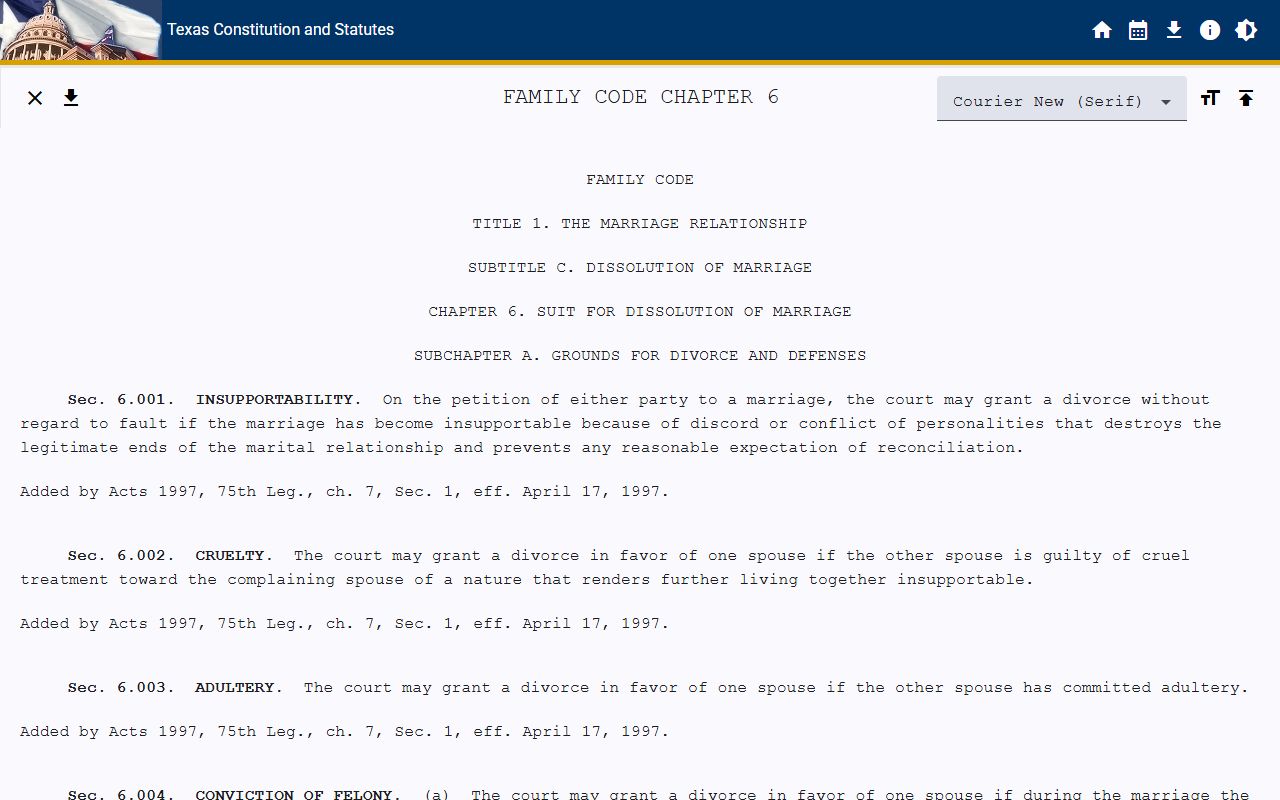
One spouse generally must have lived in Texas and in the county for the required time before a petition can be filed, which is why venue matters for a Collin County divorce. Some family files carry sealed or restricted parts; standing orders in the county seal birth certificates filed in certain parent-child and child-welfare cases.
Documents in a Collin County Divorce File
A divorce case builds a stack of papers over its life. Some are filed at the start, some during the case, and some at the end. The list below shows the common documents a Texas divorce file can hold, from the first petition to the final signed decree. Not every case will have all of them.
| Document | What It Is |
|---|---|
| Original Petition for Divorce | The filing that opens the case. |
| Civil Case Information Sheet | A cover sheet that classifies the case for the clerk. |
| Waiver or Answer | The other spouse's response to the petition. |
| Standing Order | County rules that apply while the case is open. |
| Temporary Orders | Interim rules on support, property, or children. |
| Inventory and Appraisement | A list of property and debts. |
| Final Decree of Divorce | The signed order that ends the marriage. |
Cases with children may also include a parenting plan and a child support order. The county files civil, family, and probate cases through eFileTexas, and Guide & File can build some forms for people without a lawyer.
Getting Certified Copies
You need a certified copy when proof is required. Banks, the Social Security office, immigration, and other agencies often will not accept a plain printout. Order a certified marriage copy from the County Clerk, online or in person. Order a certified divorce decree from the District Clerk. The District Clerk charges $1 per page plus $5 per document for the certificate and seal. Provide the case number, the party names, the document title, and the filing date if you know it.
Texas Vital Records and Statewide Help
The Texas Department of State Health Services keeps statewide vital records, though Texas does not issue divorce decrees at the state level. The state holds a divorce verification index and works with marriage and divorce data reported by counties. For the actual marriage license, the County Clerk is the source; for the divorce decree, the District Clerk is the source. Self-represented filers can also lean on free statewide legal help.
Collin County County Clerk
2100 Bloomdale Rd. Suite 12165
McKinney, TX 75071
(972) 548-6423
For plain-language guides on divorce, name changes, and family cases, Texas Law Help and the Texas State Law Library both publish free resources that walk through the steps.