
Active Warrants in Collin County
Warrants in Collin County come from the courts and the Magistrate Court. The Magistrate Court's official role includes issuing warrants in criminal cases, setting bond, determining probable cause, and enforcing bond conditions. The magistrate presiding is the Hon. Lisa Bronchetti, with administrator Stephan Phillips. A judge or magistrate signs a warrant when the law calls for an arrest, a court appearance, or the collection of an unpaid fine. The warrant then goes to law enforcement to serve.
Active warrants flow into the county's public search system. The Collin County Courts page links "Active Warrants" to the same Judicial Online Search global portal used for cases and inmates. The Case Information page says this one-stop search can check active warrants and link each one back to the case it ties to. The portal is updated around the clock. On 05/26/2026, the Warrants tab showed 42,148 results, a sign of how many open orders sit in the system at any time.
A warrant is not the same as an arrest. It is an order that lets an officer make one.
Types of Warrants in Collin County
Not every warrant means the same thing. Some come from a fresh criminal charge. Others come from a court when someone misses a setting or fails to pay. A few authorize a search rather than an arrest. The list below covers the main types you will see tied to Collin County cases.
- Arrest warrant - issued after a complaint and a finding of probable cause under Texas Code of Criminal Procedure Chapter 15.
- Bench warrant / capias - issued by a court after a failure to appear, a violation, or another court order.
- Capias pro fine - used in fine-only cases to collect unpaid fines and costs after the statutory process.
- Search warrant - authorizes a search or seizure, and is often not public before it is carried out.
- Fugitive / out-of-county warrant - holds a person for another jurisdiction.
- Civil writs - service and enforcement papers that appear under the separate Civil Paper tab in the portal.
The legal basis for an arrest warrant sits in the state code. The full text of Texas Code of Criminal Procedure Chapter 15 covers the complaint, the warrant, and the arrest process.
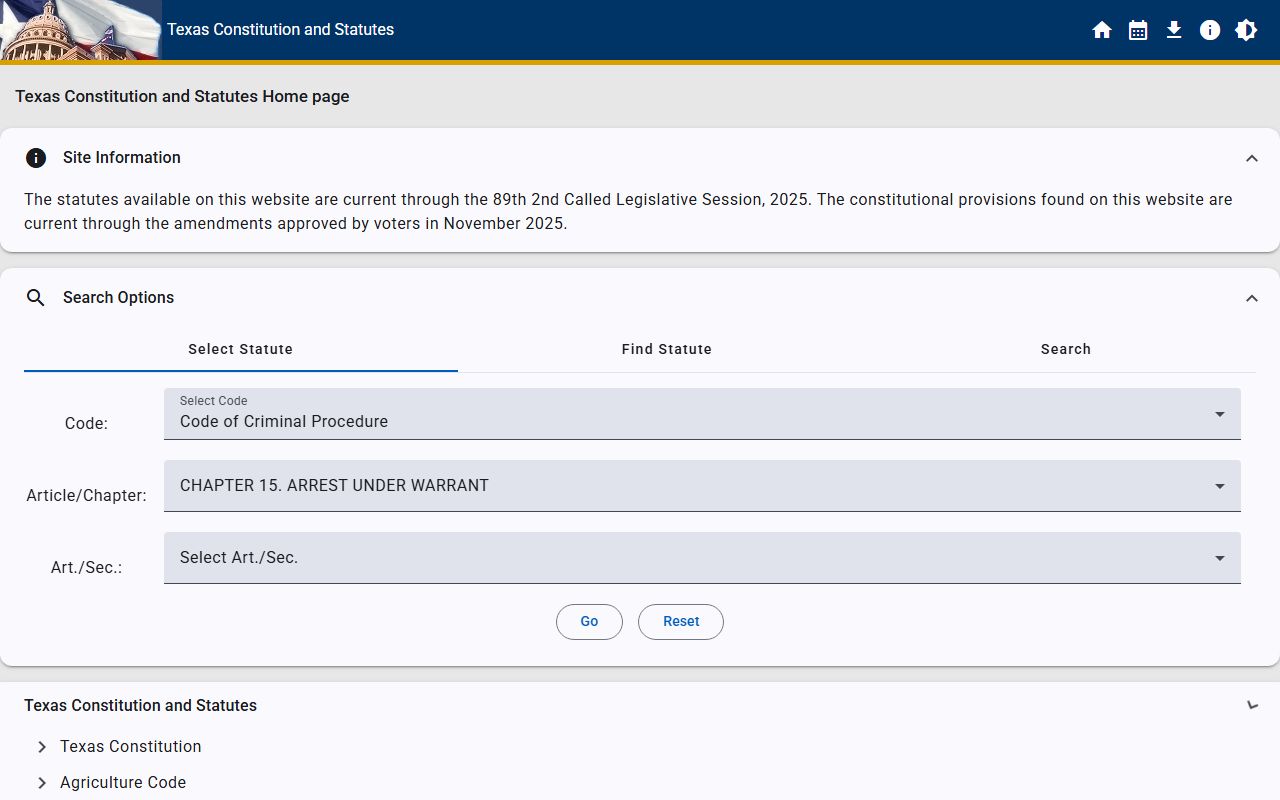
That chapter explains why a magistrate must find probable cause before an arrest warrant can issue.
How to Search Collin County Warrants
The county uses one portal for warrants. Judicial Online Search has a global view with tabs for Inmate, Case, Warrants, and Civil Paper. To check warrants, open the global portal and click the Warrants tab. You can search by warrant number, a person's name, a linked case number, or a paper number. A year of birth filter helps when a name is common.
- Open the Judicial Online Search global portal from the county Courts page.
- Type a warrant number, a person's name, or a linked case number into the search box.
- Click the Warrants tab and use the Year of Birth filter to narrow person-linked results.
The portal links each warrant back to its case where one exists, so you can move from the warrant to the charge and the court that issued it. Always use the official county portal rather than a paid third-party warrant site. The free county tool pulls from the same court data the clerks keep.
Collin County Warrant Search Fields
The Warrants tab keeps the entry box simple and puts the rest behind filters. The fields below are what you work with when you run a warrant search through the global portal. Each one trims a long result list toward the warrant you want.
| Field Label | Type | Required | Notes / Format |
|---|---|---|---|
| Search | Text | No | Warrant number, person name, linked case number, or paper number. |
| Warrants Tab | Tab | No | Shows warrant results; 42,148 observed on 05/26/2026. |
| Year of Birth Filter | Text | No | Narrows person-linked results. |
| Case Filters | Date / Checkbox / Dropdown | No | Useful when a warrant is tied to a case. |
| Pagination | Buttons / Dropdown | No | Rows per page; first, previous, next, and last controls. |
Because the same portal carries cases and inmates, a single name search can surface a warrant, a tied case, and a current jail booking at once.
What a Collin County Warrant Record Shows
A warrant result links a person to the order and the case behind it. The portal confirms the warrant tab and the linked-case behavior, and a warrant tied to a criminal case will route you to that case's details. The fields below are the kind of data a warrant record carries once you open it and follow it to the case.
| Field | What It Shows |
|---|---|
| Warrant Number | The identifier assigned to the order; used to search directly |
| Issue Date | When the court or magistrate signed the warrant |
| Charge | The offense or reason behind the warrant, shown through the linked case |
| Bond Amount | The bond set for release where the magistrate has set one |
| Issuing Court | The court or magistrate that ordered the warrant |
Some warrant details only appear after you click through to the tied case, since the result list keeps sensitive identifiers off the screen.
What to Do If You Have an Outstanding Warrant
An open warrant does not clear itself. The safest first step is to confirm it through the official Judicial Online Search or by calling the court that issued it. Once you know the issuing court and the case number, you can figure out what the warrant needs. Some need a payment. Some need a new court date. Others need bond or a voluntary surrender.
The Magistrate Court sets bond and probable cause after an arrest, so a jailable charge usually means bond is involved. If a bond is allowed, follow the county bonding process; the Bonds Office accepts cash for bonding only. Do not rely on a third-party warrant site to tell you a warrant is gone. Keep the receipt or order that shows the warrant was handled.
Important: If a warrant is tied to a jailable criminal charge, speak with a lawyer before you appear or surrender, so you understand bond and your rights first.
After-Hours Payment Warning
Timing matters when you pay to clear a warrant. The Justice Courts post an online payment warning that catches people off guard. If you have an active warrant and pay after hours, the warrant is not recalled until the next business day. So a late-night online payment does not protect you overnight.
There are a few other limits to know. The Justice Court online system adds a 5% convenience fee on payments. Juveniles cannot pay online and must come to court to pay by debit or credit card. When a warrant is the issue, plan the payment during business hours so the recall posts the same day.
Note: Paying a fine online after hours does not lift an active warrant until the court processes it on the next business day.
The Collin County Magistrate Court and Bond
The Magistrate Court is the hub for warrants and bond in Collin County. After an arrest, the magistrate advises the person of their rights, decides probable cause, sets bond, and enforces bond conditions. The magistrate does not decide guilt. That work belongs to the trial courts later. Magistration runs twice a day at the jail, normally between 8 a.m. and 11 a.m. and again between 2 p.m. and 5 p.m., though the times can shift with the judge. The Magistrate Court is led by the Hon. Lisa Bronchetti, with administrator Stephan Phillips.
Bond is the security that lets a person leave custody while a case is open. The bond amount the magistrate sets often appears with the warrant or the tied case. Several bond terms come up in warrant records, and the box below defines the common ones.
- Capias
- A writ or order directing an arrest, often after a missed setting or a failure to comply.
- Capias pro fine
- A warrant-like process used in fine-only cases to collect unpaid fines and costs.
- Bond
- Security or a promise that allows release from custody while a case is pending.
- Surety bond
- A bond posted through a bail bond company or surety.
- Personal recognizance bond
- Release based on a promise to appear, sometimes with conditions.
The Collin County Bonds Office accepts cash for bonding only, so plan the payment method before you go to clear a warrant.
Restricted Collin County Warrant Records
Not every warrant is public. Sealed warrants and sealed indictments may not appear publicly until they are executed or an arrest is made. That keeps a target from learning about a warrant before officers can act. Juvenile warrants are restricted under Texas Family Code Chapter 58, which governs juvenile justice information and confidentiality. Warrants tied to active investigations can be withheld under the law-enforcement exception in the Public Information Act.
The juvenile confidentiality rules are set out in the state code. The full text of Texas Family Code Chapter 58 explains why juvenile warrants and case files do not show up in ordinary public searches.
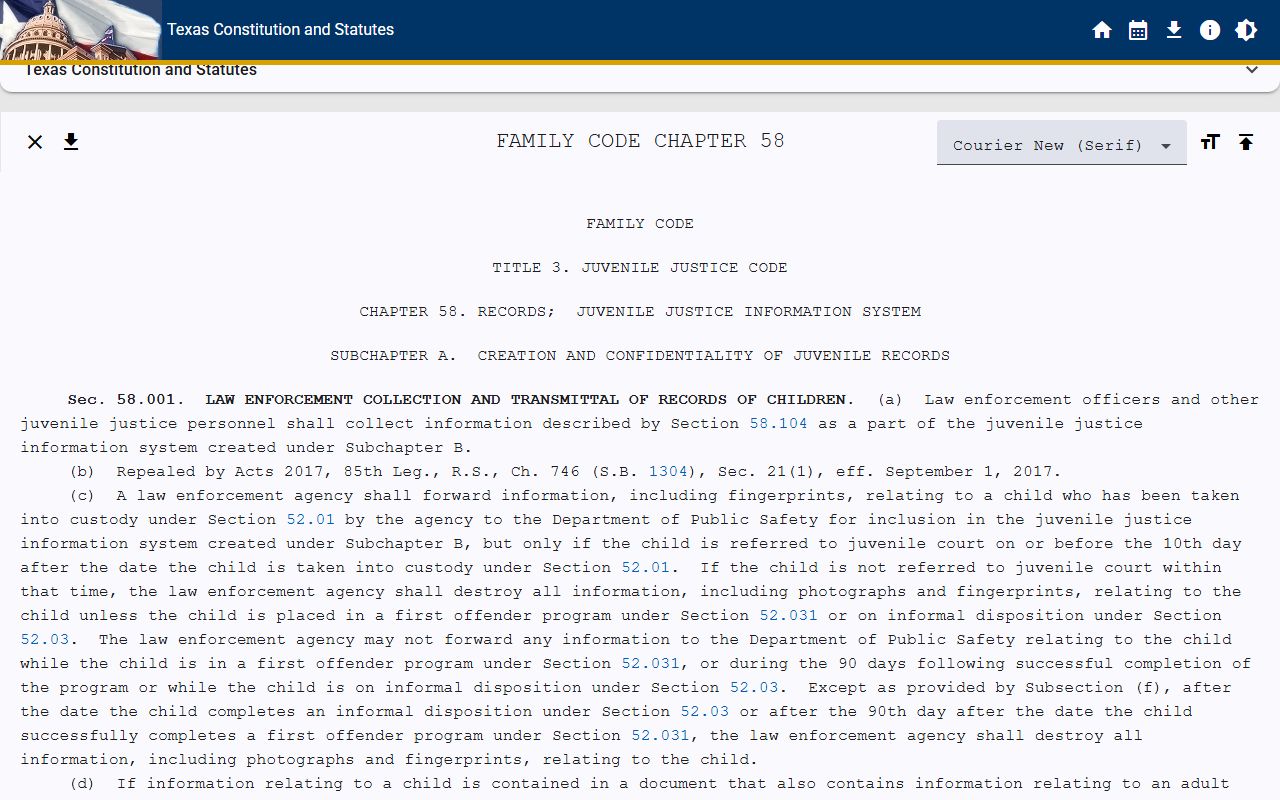
That chapter is why a missing warrant result can mean a sealed or juvenile order rather than no warrant at all.