
How to Search Collin County Traffic Court Records
The county runs traffic searches through Judicial Online Search. The official Case Information page says the one-stop search includes traffic tickets along with felonies, divorces, civil suits, inmates, and active warrants. It covers county justice court traffic cases, both open and closed, and shows the status of each. City tickets are not in this tool; those stay with the cities. The portal is mobile-friendly and updated around the clock.
Before you start, gather what you know. A citation number is the cleanest input. A traffic case number looks like 04-TR-26-04245. If you do not have it, a driver's name with a year of birth works too.
- Open the Judicial Online Search case portal from the county Case Information page.
- Type the citation or cause number, or a driver's name, into the search box.
- Open Advanced Filters to narrow by court type, case type, or filed date.
- Review the result for filing date, court date, status, and disposition.
- Pay, contest, or request a certified copy from the right court.
The traffic prosecution process is set by state law. The full text of Texas Transportation Code Chapter 543 covers citations, notices to appear, and how traffic offenses are prosecuted.
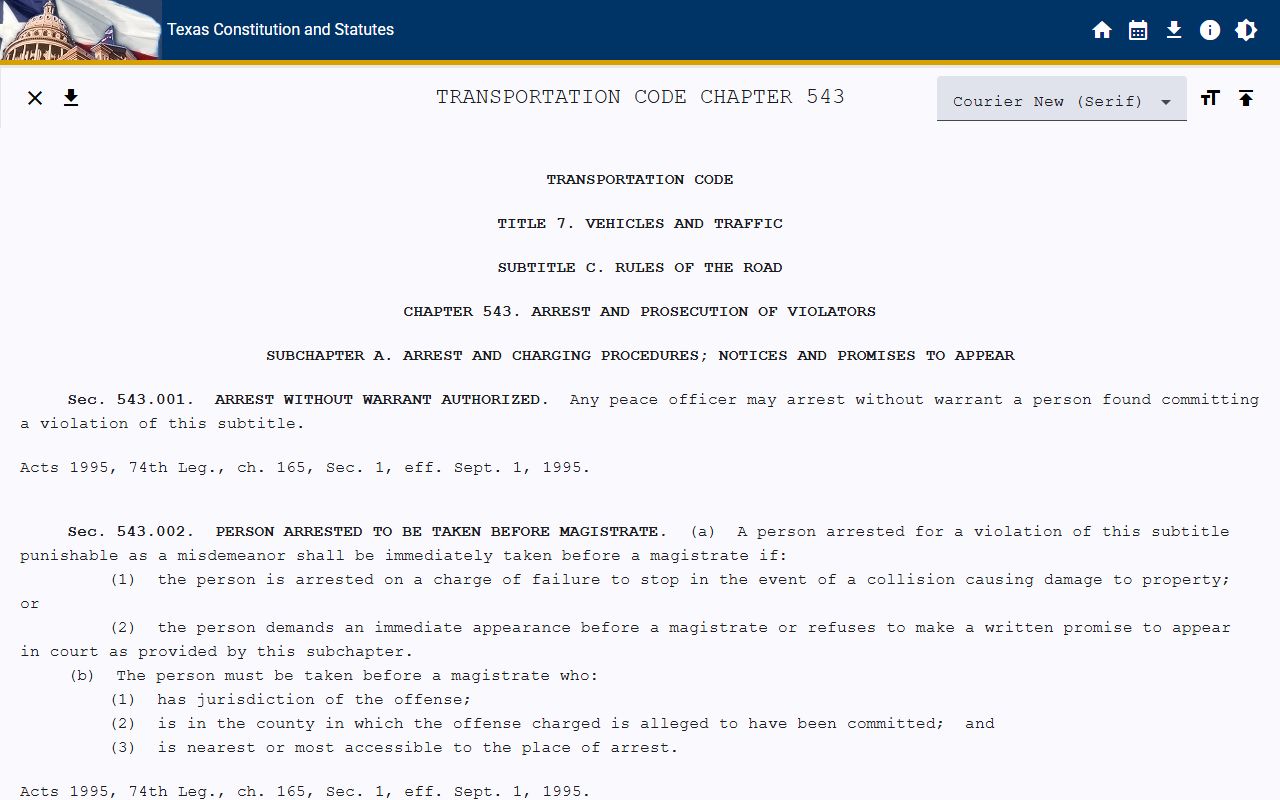
That chapter is the legal backbone for the citation that starts a Collin County traffic court record.
Which Courts Handle Traffic Cases in Collin County
Traffic cases split by where the stop happened. County roads route to the Justice of the Peace courts spread across four precincts. City streets route to municipal courts in places like Allen, Frisco, McKinney, Plano, and Wylie. The county does not maintain municipal court records, and its public-records page directs city ticket questions to the cities. So your court depends on the agency that wrote the ticket.
The justice courts handle county traffic and Class C matters, small claims, and evictions. Those are the cases you can pull through the county portal. The table below lists the four Collin County Justice of the Peace courts that hear county traffic cases.
| Court | Traffic Cases Handled | Address |
|---|---|---|
| Justice Court Precinct 1 | County Class C traffic, small claims, evictions | 2300 Bloomdale Rd., McKinney, TX 75071 |
| Justice Court Precinct 2 | County Class C traffic, small claims, evictions | 1025 S. State Highway 78, Lavon, TX 75166 |
| Justice Court Precinct 3 | County Class C traffic, small claims, evictions | 920 E. Park Blvd., Plano, TX 75074 |
| Justice Court Precinct 4 | County Class C traffic, small claims, evictions | 8585 John Wesley Dr., Frisco, TX 75034 |
The justice courts run both Zoom and in-person hearings, so follow the appearance instructions on your hearing notice. An interactive precinct map on the county JP page helps if you are unsure which court holds your case.
Types of Traffic Cases on Record
Traffic cases cover more than speeding. The county portal can pull any Class C traffic matter filed in a justice court. The categories below show the common types you will find on a Collin County traffic record, from moving violations to commercial driver issues.
- Moving violations - speeding, running a light, unsafe lane changes, and similar driving offenses.
- Non-moving and equipment - expired registration, no insurance, or a vehicle defect cited at a stop.
- Parking - local parking citations, generally handled by the city that issued them.
- Commercial vehicle / CDL - violations by drivers holding a commercial license, which carry stricter rules.
- Failure to appear or pay - a missed court date or unpaid fine that can add a warrant to the record.
Observed traffic case numbers in the county system include 04-TR-26-04245 and 01-TR-26-02409, and observed statuses include "Filed" and "Driver's Safety Course Granted." Those statuses tell you where a case stands.
What Collin County Traffic Court Records Show
A traffic record carries the basics of the ticket and the case. You see who was cited, what for, when court is set, and how the case ended. Financial fields show the fine and costs, and a case can show whether a driver safety course or deferred disposition was granted. Failure to appear or pay can flag a warrant status on the record. The table below breaks down the fields a traffic case file shows.
| Field | What It Shows |
|---|---|
| Citation Number | The ticket or cause number, in a format like 04-TR-26-04245 |
| Charge / Statute | The traffic offense cited, such as speeding or no insurance |
| Court Date | The scheduled hearing or appearance date |
| Disposition | The outcome or status, such as Filed or Driver's Safety Course Granted |
| Fine Amount | The fine and court costs assessed on the case |
| Warrant Status | Whether a failure to appear or pay has added a warrant |
Not every value shows in the first result list. Some financial detail appears only after you open the case or reach the online payment link.
Searching by Citation Number vs by Name
Each search method has a best use. A citation number points to one case, so it is the cleanest input when you have the ticket in hand. A name search casts wider and can return several matches, which is why a year of birth filter helps. The portal lets you mix both with advanced filters for court type and filed date. The fields below show what the county case search asks for.
| Search Field | Type | Required | Notes / Format |
|---|---|---|---|
| Search | Text | No | Citation or cause number, party name, case style, or attorney name. |
| Filed Date Range | Date | No | From and To fields in MM/DD/YYYY format. |
| Court Types | Checkbox | No | Filter to Justice (JP) for county traffic cases. |
| Year of Birth Filter | Text | No | Narrows a name search when matches are common. |
A common pitfall is a mistyped citation number. The traffic format uses a precinct prefix, a TR code, and a year, so check each part before you assume a case is missing.
Paying or Contesting a Collin County Traffic Ticket
You generally have two choices on a traffic ticket. You can pay it, which is treated as a guilty or no-contest resolution. Or you can contest it and ask for a court setting. The justice courts take online payments, but the system adds a 5% convenience fee. Juveniles cannot pay online and must come to court to pay by debit or credit card. Watch the deadline on your notice, since a missed date can add a warrant.
If you want to fight the ticket, you set the case for a hearing rather than paying. The justice courts hold both Zoom and in-person hearings, so follow the appearance instructions on your hearing notice. Do not contact the judge outside the presence of all parties; the JP page quotes the ex parte rule for that reason. The step-by-step below covers the basic path.
- Look up the citation in the county portal to confirm the court, the amount, and the deadline.
- To resolve quickly, pay through the precinct's online payment link, noting the 5% convenience fee.
- To contest, enter a not-guilty plea and request a court setting before the deadline.
- Follow your hearing notice for the Zoom or in-person appearance instructions.
- If eligible, ask about a driver safety course or deferred disposition instead of a conviction.
Note: An online payment made after hours on a case with an active warrant is not recalled until the next business day.
Public Access Laws for Traffic Court Records
Texas treats government records as open by default, but court files follow their own rules. The Texas Public Information Act in Government Code Chapter 552 sets the broad policy, while access to court information runs through rules the Supreme Court of Texas adopts. Traffic records add a layer, because driver and vehicle data carry their own protections. The county tells people to ask the courts for case records, not the open-records staff.
Key Statutes:
Texas Transportation Code Chapter 543 - governs traffic citations, notices to appear, and prosecution.
Texas Transportation Code Chapter 521 - governs driver license records and license suspensions.
Government Code Section 552.130 also protects Texas driver license, motor vehicle title, and registration data, so traffic files and exhibits with driver detail may be redacted before release.
Court Traffic Records vs State Driver Records
This is the distinction people miss most. The county court file is the case record. It shows the ticket, the court date, the fine, and the outcome. The state driver record is a separate file kept by the Texas Department of Public Safety. It shows license status, convictions, crashes, and suspensions. Clearing a court case does not automatically change what the state driver record reflects, and the two are accessed through different systems.
| Record Type | Source | What It Shows | How to Access |
|---|---|---|---|
| Court Traffic Record | County justice court / city municipal court | Citation, court date, disposition, fine, warrant status | County Judicial Online Search or the court clerk |
| State Driver Record | Texas DPS | License status, convictions, crashes, suspensions | Texas DPS driver record portal through Texas.gov |
The driver license record framework sits in the Transportation Code. The full text of Transportation Code Chapter 521 covers driver license records and suspensions.
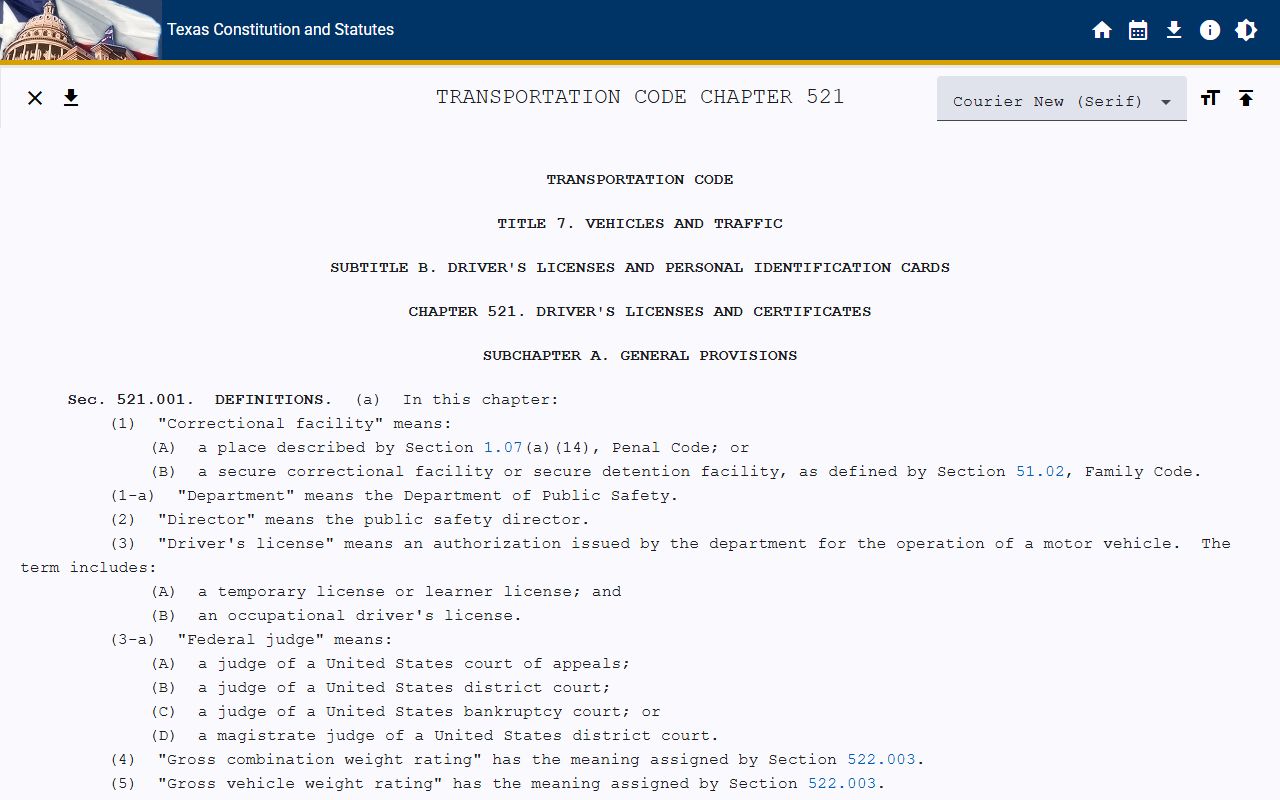
That chapter explains why a clean court disposition and a clean state driver record are two separate goals.
To pull the state side, drivers use the Texas DPS driver record portal. You can reach it through the Texas driver record portal to order an official record.
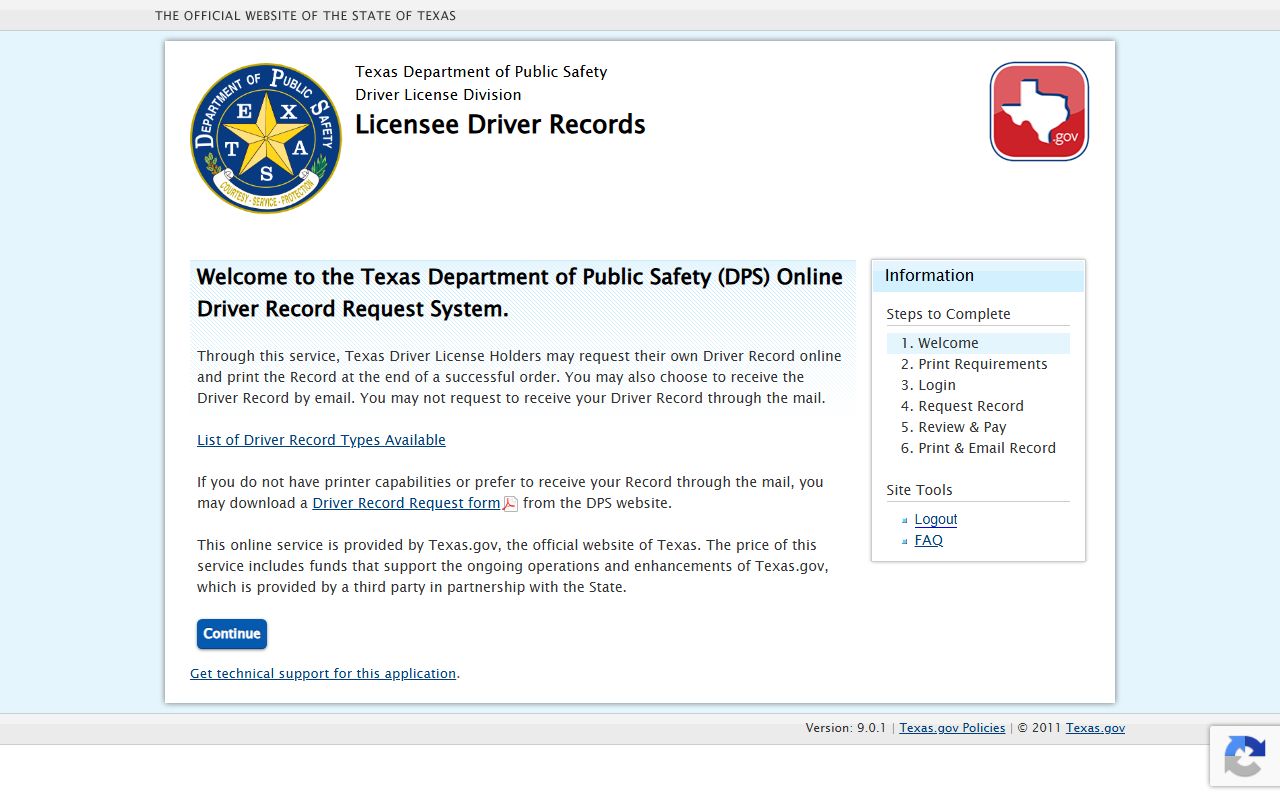
To correct an error on the state record, you work with DPS, not the county court, since DPS maintains that file.
CDL and Commercial Driver Records
Commercial drivers face stricter rules. A CDL holder often cannot take deferred disposition to keep a traffic conviction off the record the way other drivers can. Federal reporting requirements mean many commercial violations get reported to the driver's record regardless of how a court resolves the ticket. A CDL holder cited for a moving violation should treat it seriously, since it can affect their license and their job.
Because the CDL rules and the deferred-disposition limits come from state and federal law rather than the county, verify the current details with Texas DPS before you decide how to handle a commercial ticket. The general principle holds: a CDL conviction is harder to hide and carries more weight than the same ticket for a personal driver.
DUI / DWI Cases
DWI is not a traffic ticket. In Texas, driving while intoxicated is a criminal charge, so it routes to criminal court rather than the justice court traffic docket. A DWI starts with an arrest and booking, then moves to a misdemeanor or felony case depending on the facts. You will not find a DWI resolved as a simple traffic citation in the county traffic search.
For full Collin County DUI/DWI case information, see Collin County criminal records, which covers arrests, charges, and the court files that follow.
Deferred Adjudication and Defensive Driving Course
Texas gives traffic defendants ways to avoid a conviction on the record. A driver safety course, often called defensive driving, can keep a moving violation off the driving record if the court grants it and the driver completes it. The county system has shown a status of "Driver's Safety Course Granted," which is the marker for that path. Deferred disposition is a similar tool, where the court holds the case and dismisses it if the driver meets the terms.
Eligibility and cost depend on the offense and the court. You usually request the course or deferral by the deadline on your notice, pay the required fee, and submit proof of completion. Done right, it can stop the violation from reaching the state driver record as a conviction. CDL holders are often excluded from these options.
Sealing or Expunging Traffic Records
Some traffic records can be cleared, but not all. Texas Code of Criminal Procedure Chapter 55 governs expunction, and some Class C deferred dispositions can qualify after the case is dismissed. Expunction is not automatic. A qualifying person files a petition in the proper court, names the agencies that hold records, and gets a signed order. Once final, the order tells agencies to destroy or remove the records.
A nondisclosure order is different and narrower; it limits public release but does not erase the file for criminal justice agencies. Because eligibility turns on the exact disposition and any waiting period, check the specific outcome of your case before assuming a traffic record can be sealed or expunged.
Fees for Traffic Record Copies
The clerks charge set fees for copies and searches. The amounts below come from the Collin County clerk fee schedules and forms. A records search runs $5 when you do not have the cause number, plain copies are $1 per page, and a certified copy adds a $5 certificate fee per document. Court clerk fees in Texas are set under Government Code Chapter 51 and local schedules.
| Item | Amount |
|---|---|
| Plain copy per page | $1.00 |
| Certified copy certificate fee | $5.00 per document |
| Records search (cause number unknown) | $5.00 |
| Online payment convenience fee | 5% of the payment |
The statutory basis for many court clerk fees sits in the Government Code. The full text of Texas Government Code Chapter 51 covers clerk fees and related charges.
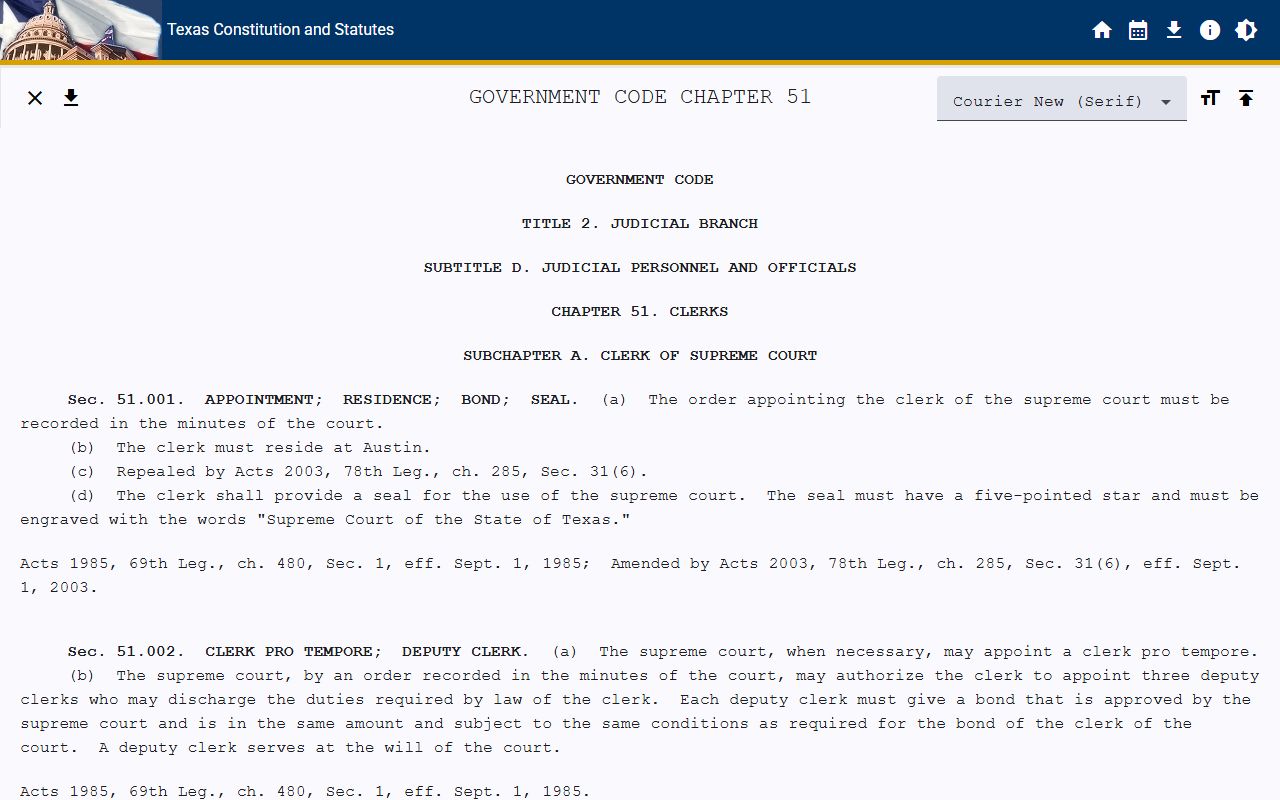
That chapter is the source for many of the copy and certification fees the clerks list on their pages.